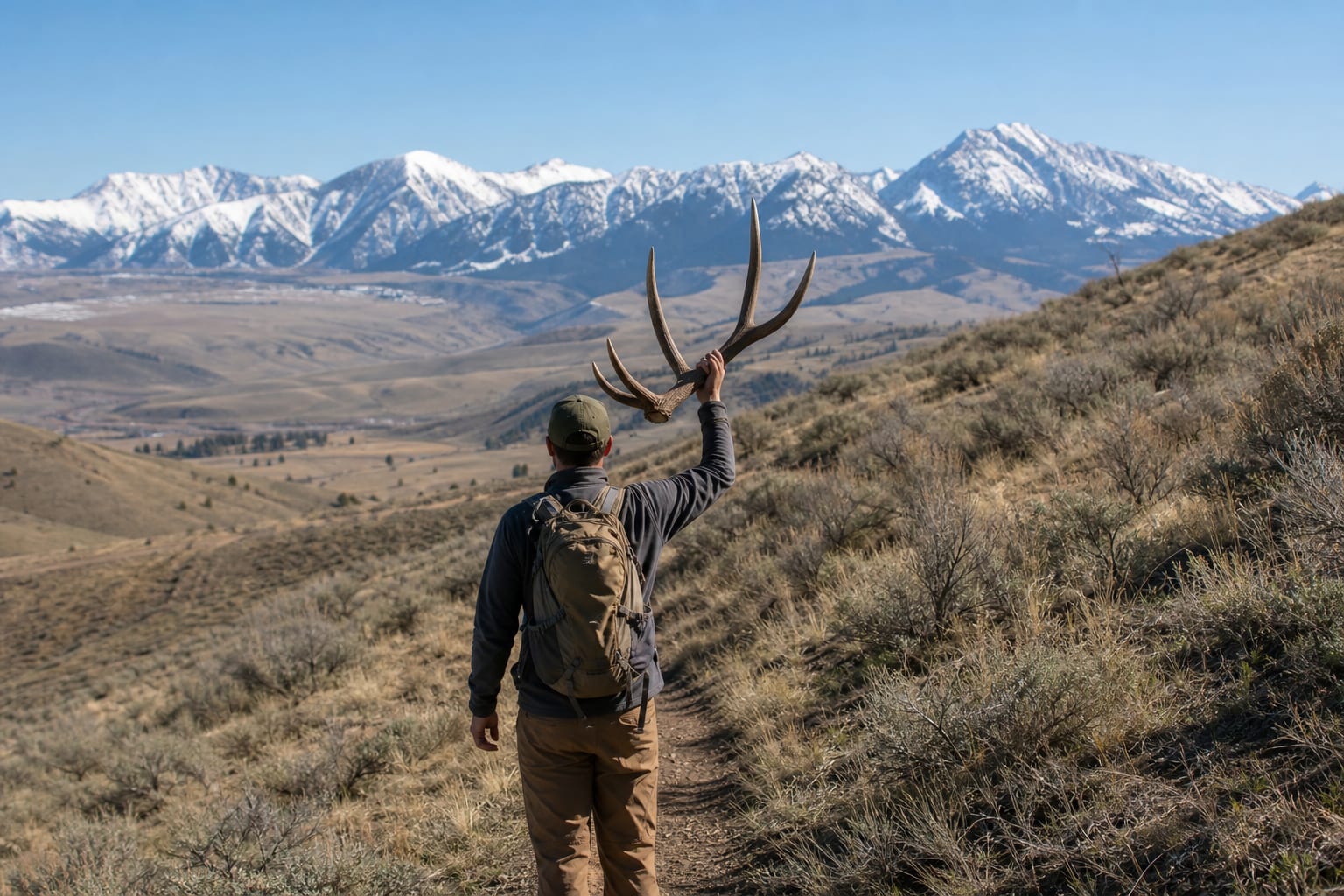

The snowpack is way down this year, the foothills are already drying out, and if you’ve spent any time near the Gallatin Valley in the last few weeks, you’ve noticed everyone is eyeing the ground a little more carefully on their hikes. Shed season is here early, and the urge to find a matched set of elk antlers in the dry grass is hard to resist.
Finding brown gold is a legitimate thrill. But heading out responsibly, knowing the new regulations, and actually protecting the herds you’re hunting around is worth understanding before you go.
The New 2026 FWP Rules (Read This Part)
Montana Fish, Wildlife and Parks updated the rules for shed hunting this year, and if you’re not a Montana resident, the changes affect you directly.

The $50 License
Non-residents now need to purchase a $50 shed hunting license to collect antlers on Wildlife Management Areas. This applies specifically to WMAs, not to National Forest or BLM land, so if you’re currently scouting public land outside of a WMA boundary, you’re fine without it. But if you want to walk a WMA and legally pick up anything you find, get the license first.
The 7-Day Head Start for Residents
Even with the $50 license in hand, non-residents are prohibited from picking up antlers on WMAs for the first seven days after they open in the spring. Most WMAs don’t officially open until noon on May 15 (some have different dates, so check your specific WMA before you go), so the first week of WMA season belongs entirely to Montana residents this year. If you live here, that’s a genuinely good deal, and you’ll have those areas to yourself before out-of-state hunters arrive.
If you’re visiting from out of state, stick to National Forest and BLM land until May 22, then grab your license and head for the WMAs.
For Residents
Enjoy the head start. The first week on a fresh WMA is about as good as shed hunting gets around here.
Deadheads: Know the Rules Before You Pick One Up
If you find a deer or elk deadhead, meaning a skull with the antlers still attached, Montana law under MCA 87-6-202 lets you keep it with no plugging or reporting requirement, as long as the animal died naturally and wasn’t unlawfully taken. You don’t need to visit an FWP office or do any paperwork. Just make a note of where you found it in case anyone asks.
Bighorn sheep are a different story. If you come across a bighorn skull with horns, you need to report it to FWP within 48 hours and bring it in to be pinned within 10 days. Those rules live under MCA 87-3-315 and are strictly enforced.
Ethics: The Part Most People Skip
The regulations are the easy part. The harder conversation is about timing and what your presence in the foothills actually does to wintering wildlife right now.
Elk and mule deer are surviving on their last reserves of body fat in late winter and early spring. Getting bumped off winter range by eager hikers costs them energy they genuinely cannot replace yet, and a spooked elk that runs a half mile because it heard you coming is burning calories it can’t afford to burn.
A good rule of thumb: if you can still see the herds on their winter grounds, you’re too early for that drainage. Wait until the grass greens up and they move to higher elevations on their own. The animals will tell you when it’s time.
Leave the dog at home. This one is unpopular but worth saying plainly. Even well-trained dogs cause a significant stress response in wintering wildlife. The animal doesn’t know your dog is friendly, and the flight response is the same whether it’s a predator or a lab on a long lead. Early-season shed hunts are a good time to give your dog a rest day.
Trail Safety in Early Spring
The early snowmelt that’s making shed season so attractive right now is the same thing that’s waking bears up earlier than usual. Bears are coming out of dens hungry and active, and they’re moving through the same foothills terrain that shed hunters are covering. Carry bear spray, keep it accessible on your hip, and know how to use it before you need it. If you want a full rundown on proper carry, deployment, and storage, our bear spray guide covers everything.

Spring conditions also mean sloppy trails in a lot of places. The instinct to walk around the muddy sections is understandable, but stepping off the trail to avoid mud is what widens it and causes real damage over time. Walk through the mud, not around it. Waterproof boots make this considerably easier.
A Day in the Foothills Is Still a Win
You don’t need to come home with antlers for the day to count. A few hours in the hills in early April, when the peaks are still white and the valleys are starting to green up, is a pretty good morning regardless of what you find.
Check the FWP website for current WMA boundaries and opening dates before you head out, confirm your license situation if you’re not a resident, and give the herds a little room if they’re still down low.