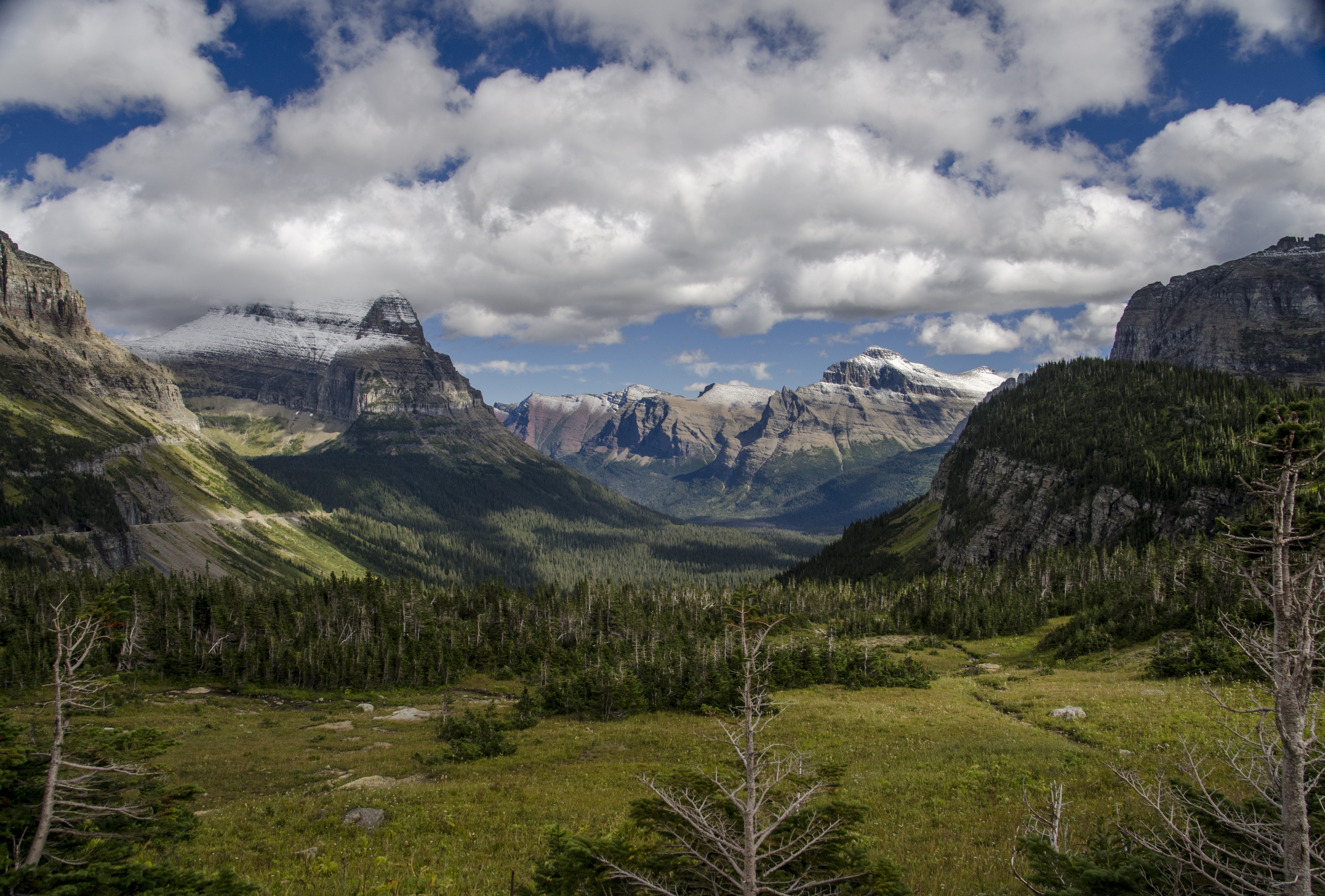
The Going-to-the-Sun Road is a 50-mile stretch of pavement that will blow your mind. It connects West Glacier to St. Mary, crossing the Continental Divide at Logan Pass (6,646 feet). This is one of the most incredible drives in America, and it lives up to every bit of the hype.


The road took 11 years to build, opening in 1933 at a cost of $2.5 million. Engineers carved it directly into the mountainside, threading through tunnels and hugging cliffs with nothing but a stone guardrail between you and a very long drop. It’s a National Historic Landmark and a feat of engineering that still holds up almost a century later.
When to Go
The road is only fully open for a few months each year, roughly late June to mid-October. Snow keeps Logan Pass closed the rest of the time, and park crews spend months plowing through drifts that can reach 80 feet deep. The exact opening and closing dates vary every year depending on when plowing is complete. Some years it opens in mid-June, other years not until early July. Check the park website before planning your trip.
Mid to late summer is ideal. The weather is generally great, though wildfire smoke can cloud the views in August and September. Check air quality reports before you go if you’re visiting during fire season.
The Drive
The 50-mile drive takes about 2 hours without stops, but plan for much longer. You’ll want to pull over constantly for photos, and there are several short hikes worth doing along the way. Most people spend half a day or more.
If you drive one direction, you’re probably coming back the other way, so you’ll see everything from both sides. The road is narrow and winding with hairpin turns, especially west of Logan Pass. Vehicles longer than 21 feet or wider than 8 feet are prohibited on the central section.


If you want to actually enjoy the scenery instead of white-knuckling the wheel, take a Red Bus tour. The vintage 1930s buses (called “jammers” because drivers used to jam the gears on the steep grades) have roll-back canvas tops for unobstructed views. They’re the oldest touring fleet still in operation anywhere in the world. Tours depart from various locations in the park and are worth the money.
The park also runs a free shuttle system during peak season, which helps if you’re worried about parking at popular trailheads.
Must-See Stops
Logan Pass is the high point of the road at 6,646 feet. There’s a visitor center here and the trailhead for the Hidden Lake Overlook, a short hike with big payoff. Parking fills up fast, so arrive early or take the shuttle. The park has implemented a 3-hour parking limit to help with turnover.


St. Mary Lake sits on the east side of the park with Wild Goose Island in the middle. It’s one of the most photographed spots in Montana. Pull off at the Wild Goose Island Overlook for the classic view.


The Glaciers are the park’s namesake, and they’re disappearing. In 1910, there were an estimated 150 glaciers in the park. Today, only 26 remain, and they’ve shrunk by about 39% since 1966.
Wildlife
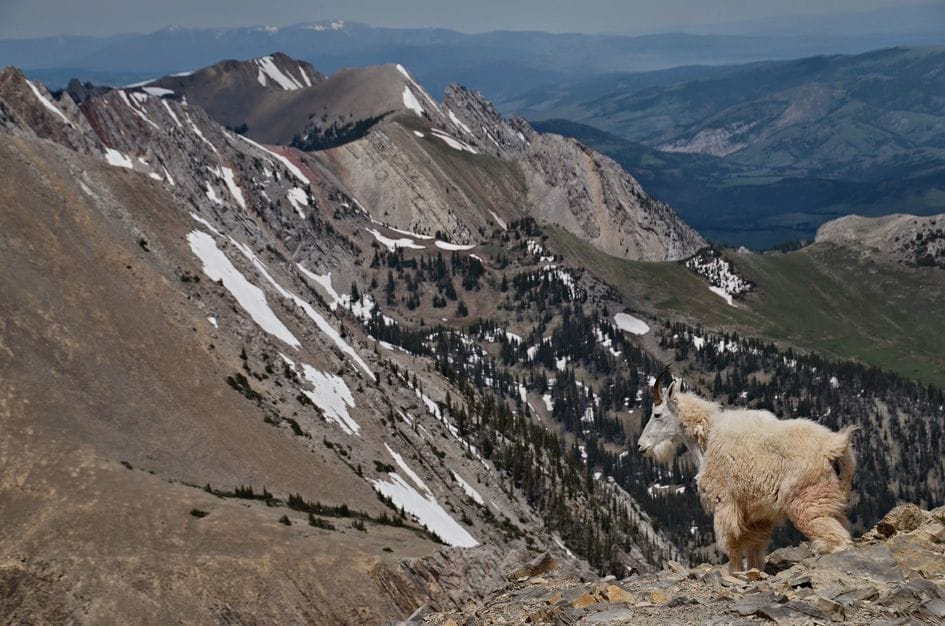
This is bear country. We spotted a grizzly on the shores of St. Mary Lake, just foraging in the brush near the road. Keep your eyes open at pullouts and along the lakeshore. Mountain goats are common around Logan Pass, and you might see bighorn sheep, marmots, and eagles.


Reservations and Entry
The park has been experimenting with vehicle reservation systems to manage crowding. Check the current requirements before you visit at the park website or Recreation.gov. Rules may change year to year.
Even without reservation requirements, popular parking lots like Logan Pass and Avalanche Lake fill up early on summer mornings. Plan to arrive before 8 AM or use the shuttle.
Where to Stay
In the Park: Lake McDonald Lodge and Many Glacier Hotel are the two historic lodges. Lake McDonald Lodge was built in 1913 and sits on the largest lake in the park. Many Glacier Hotel has access to some of the best hiking. Both book up months in advance.
Nearby Towns: Whitefish is the largest town nearby with the most amenities. Columbia Falls is closer to the west entrance. Polebridge is a tiny outpost on the North Fork with a famous bakery and access to the park’s quieter northwest corner. Fair warning: the North Fork Road to Polebridge is 35 miles of gnarly gravel.
Cabin Rentals: We stayed at Ben Rover Cabin, a Forest Service rental near Polebridge. At $65/night, it’s a rustic option right on the North Fork of the Flathead River. Reservations through Recreation.gov.


The Bottom Line
The Going-to-the-Sun Road deserves its reputation. The combination of engineering, scenery, and wildlife is hard to match anywhere in the lower 48. Plan for crowds, get there early, and consider letting someone else drive so you can take it all in.