
Originally published May 2016. Updated June 2026.
Bear spray is an EPA-registered aerosol deterrent made for aggressive or charging bears. It is not bug spray, it is not something you put on your gear, and it is not the same thing as the small personal-defense pepper spray people carry in cities.
If you are hiking near Bozeman, Big Sky, Yellowstone, Glacier, or anywhere else in Montana bear country, carry bear spray where your hand can reach it immediately. The can in the bottom of your pack is mostly just expensive weight.
Quick Answer
Bear spray creates a fast-moving cloud of capsaicin-based irritant between you and an aggressive bear. The point is to interrupt the charge long enough for you to leave the area. Choose an EPA-registered canister labeled for bears, check the expiration date, carry it in a hip or chest holster, and practice pulling the safety before you are on trail.
What Is Bear Spray?
Bear spray is a last-line deterrent for bear encounters. The National Park Service describes EPA-registered bear sprays as products labeled for deterring bear attacks, with active ingredients that affect a bear’s eyes, nose, mouth, throat, and lungs.
That distinction matters. Bear spray is for a charging or aggressive bear. It is not a campsite repellent. Do not spray it on tents, packs, clothing, coolers, dogs, or yourself. The National Park Service and Interagency Grizzly Bear Committee both warn that bear spray is a deterrent, not a repellent.
For the full agency guidance, start with the Grand Teton National Park bear spray page, the Custer Gallatin National Forest bear spray page, and the Interagency Grizzly Bear Committee bear spray guidance.
How Bear Spray Works
Bear spray comes out as an expanding fog, not a narrow stream. That cloud gives you a better chance of putting irritant between you and a fast-moving animal without needing perfect aim.
Most agency guidance points to the same basics:
- Keep the can accessible, not inside your pack.
- Remove the safety only when you may need to use it.
- Aim slightly downward so the cloud rises into the bear’s path.
- Be ready to spray again if the bear keeps coming.
- Leave the area after using it. Do not run.
Distance depends on the product and conditions. Yellowstone guidance says to spray when a charging bear is 30 to 60 feet away, while Denali guidance notes that a very fast charge may justify spraying earlier to build a wall between you and the bear. The practical takeaway is simple: read the label on your can, practice the motion with an inert trainer if possible, and do not wait until the bear is on top of you to learn the trigger.
Wind, rain, cold, age, and an expired canister can all affect performance. If you hike often, make checking the expiration date part of your spring gear reset.
Bear Spray vs. Mace
Bear spray and personal mace are not interchangeable.
Bear spray is regulated for bears and is designed to throw a wide cloud at distance. Personal defense sprays are designed for humans and often use a narrower stream or smaller canister. The National Park Service explicitly recommends EPA-approved bear spray for bear country and warns that personal protection or law-enforcement sprays are not the right substitute for a charging bear.
When you shop, look for:
- EPA registration on the label.
- A label that says the product is for deterring attacks by bears.
- Enough contents for the trip; NPS guidance says EPA-registered bear sprays have a minimum content of 7.6 ounces or 215 grams.
- A stated range of at least 25 feet.
- At least six seconds of spray duration.
- An unexpired canister and a holster you will actually wear.
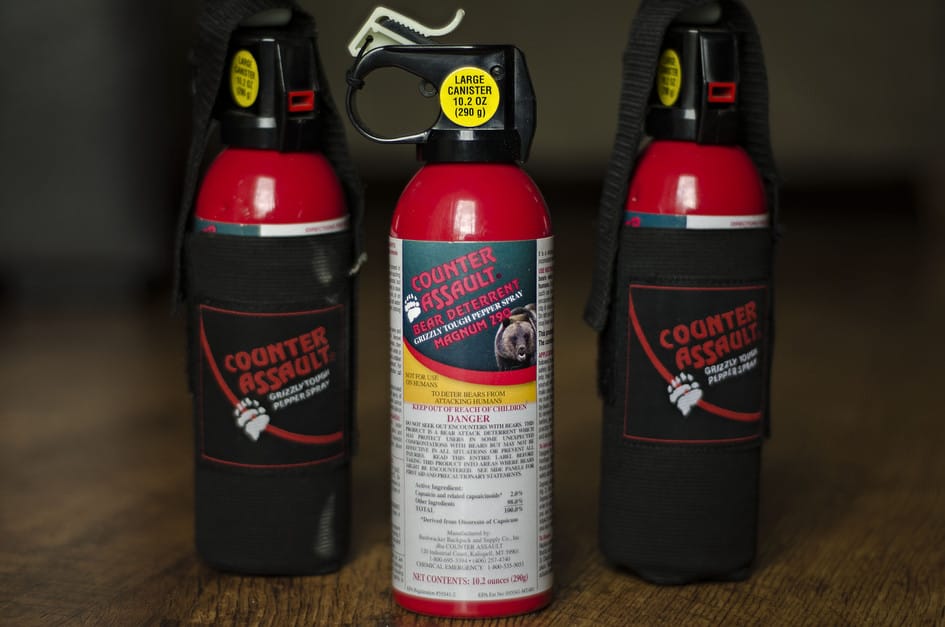
Brand is secondary to those label requirements. Counter Assault, UDAP, and Frontiersman are common bear-spray brands you will see in Montana outdoor shops, but the important decision is whether the specific can in your hand is EPA-registered, current, large enough, and easy to carry.
When You Need Bear Spray in Montana
If you are hiking in grizzly or black bear habitat, carry it. Around Bozeman, that includes the obvious backcountry routes near Big Sky, the Gallatin Canyon, Hyalite Canyon, Paradise Valley, the Absaroka-Beartooth Wilderness, and the Crazies. Bears also move through lower, busier terrain, so do not use proximity to town as your safety plan.
These site guides are especially relevant:
- Big Sky hiking: resort-adjacent trails that still sit in serious bear country.
- The Beaten Path: a long backcountry route in the Absaroka-Beartooth Wilderness.
- Pine Creek Lake: Paradise Valley and Absaroka terrain where bear awareness matters.
- Tumbledown Lake: a quieter Madison Range hike with more remote-feeling travel.
- Fairy Lake to Sacagawea Peak: Bridger Range alpine terrain where wildlife encounters are part of the deal.
- Wildlife near Big Sky: a broader look at animal behavior, viewing ethics, and why roadside wildlife still needs distance.
Bear spray is not a replacement for normal bear-country habits. Make noise, hike in groups when you can, keep food controlled, give wildlife room, and never approach a bear for a photo.
How to Carry Bear Spray
Carry bear spray where you can draw it with one hand in a couple of seconds. A hip holster, chest holster, or shoulder-strap holster is the right idea. The mesh pocket on the side of your pack is marginal. The main compartment of your pack is useless in the moment that matters.
Before you hike, practice:
- Pulling the can from the holster.
- Removing the safety clip.
- Finding the trigger without looking down.
- Switching hands if your dominant hand is holding trekking poles, a leash, or a kid’s hand.
Do this with the safety on and the nozzle pointed away from people. For real practice, buy or rent an inert training canister.
How to Store and Retire Bear Spray
Do not leave bear spray in a hot, enclosed vehicle. National Park Service guidance warns that overheating can cause a canister to explode.
At home, store it where kids cannot reach it, away from heat, and with the safety clip installed. On the road, keep it protected from heat and accidental puncture. On trail, keep it accessible but secure.
Bear spray also expires. Replace expired cans instead of treating the date as a suggestion. An old can may lose pressure, spray for less time, or fail when you need it.
How Bozeman Visitors Should Plan for Bear Spray
If you are flying into Bozeman, plan to get bear spray after you land. TSA lists bear spray as prohibited in both carry-on and checked bags, and FAA PackSafe guidance notes that most bear sprays exceed the 4-ounce exception for certain checked sprays. Check TSA’s bear spray rule, the FAA PackSafe sprays guidance, and your airline before assuming anything can fly.
After arrival, check current park or agency guidance and contact local outdoor retailers or visitor information sources directly before your first hike. Inventory, rental options, pickup windows, and disposal rules can change, so verify the details before building a trail day around a stop.
FAQ
What is bear spray?
Bear spray is an EPA-registered aerosol deterrent for aggressive or charging bears. It creates a cloud of irritant that can affect a bear’s eyes, nose, mouth, throat, and lungs long enough for you to leave the area.
How does bear spray work?
It throws a fog cloud between you and the bear. When the bear runs into that cloud, the capsaicin-based irritant can disrupt the charge.
What does bear spray do?
It causes temporary irritation. It is meant to stop or redirect aggressive behavior, not to repel bears from your campsite or make your gear smell scary.
How long does bear spray last?
EPA-registered bear sprays should provide at least six seconds of spray duration, but exact duration varies by product. Shelf life also varies, so check the expiration date printed on your canister.
Is bear spray the same as mace?
No. Bear spray is labeled and regulated for bears, uses a broader fog pattern, and comes in a larger canister. Personal mace is designed for humans and is not the right tool for a charging bear.
Can I bring bear spray on a plane?
No. TSA lists bear spray as prohibited in both carry-on and checked luggage, and most full-size bear spray canisters are also too large for FAA checked-spray exceptions. Most Montana visitors who fly should buy or rent after arrival.
Does bear spray work on mountain lions?
Bear spray is labeled for bears, not as a universal wildlife solution. It may affect other mammals because it is a strong irritant, but you should follow agency-specific wildlife guidance for the animal and place you are visiting.