Every wildlife search near Big Sky returns the same results: guided safari tours running $150 to $250 per person, the Grizzly & Wolf Discovery Center in West Yellowstone at $17.50 for captive animals behind fences, and resort blog posts that say “you might see a moose!” without telling you where to actually look.
The Discovery Center does meaningful conservation work, and for a first-time visitor who has never been close to a grizzly, it delivers something real. It’s also one of the few wildlife experiences that is reliably accessible to people with mobility limitations. But captive animals in West Yellowstone is not the same story you’ll be telling when you describe the bull elk that crossed the road at dawn in front of your car.
Here’s what the tour operators don’t advertise: Highway 191 through the Gallatin Canyon cuts through one of the most intact wildlife corridors in the Greater Yellowstone Ecosystem, home to the largest concentration of wildlife in the lower 48. Grizzly bears, black bears, elk, moose, bighorn sheep, bison, wolves, mountain lions, bald eagles, cutthroat trout, and that is not the full list. The road is free. The animals are wild. You just need to know when and where to look. This is that guide.


Timing Is Everything
Before we get into locations, this is the most important section in the entire post. You can be in the right spot and see absolutely nothing if you’re there at the wrong time.
The basic rule: be out at first light or within the last hour before dark. Mid-day in summer, you will see almost nothing. The animals are there, they’re just bedded down in the timber where you can’t see them.
Each season is different. Spring (late May through June) brings newborn elk calves and fawns, and it’s one of the best windows for bears. Grizzly mothers can often be seen feeding in meadows with their cubs after emerging from hibernation, drawn to the lower elevations where the first green-up happens. Summer means dawn and dusk are your only real windows since the heat pushes everything into shade by mid-morning. Fall is the most spectacular season. Elk rutting season runs September through October, and bulls bugling in the Gallatin Canyon is genuinely unforgettable. Late August through early October is also when bears enter hyperphagia, consuming up to 20,000 calories a day to pack on weight before winter. They feed up to 20 hours a day during this window, which makes them much more visible than at any other time of year.
Winter changes things entirely. Animals move to lower elevations where the snow is shallower, which means they’re closer to roads and easier to spot. We’ve driven to Big Sky in January and seen herds of bighorn sheep on the highway shoulder, moose standing in the river, and red fox crossing the road, all without even trying. The canyon is quieter in winter too, and you don’t have to compete with summer traffic for pull-off space.

The Gallatin Canyon Corridor: Your Free Wildlife Highway
This is the core of this guide. Highway 191 between Bozeman and Big Sky, continuing south toward West Yellowstone, is essentially a free, drive-at-your-own-pace wildlife safari. The Center for Large Landscape Conservation found that 25% of all vehicle collisions on this stretch of highway involve wildlife, which is five times the national average. That’s a statistic you want to be careful about (more on safety later), but it also tells you something important: the animals are everywhere and they’re right next to the road.
Bighorn Sheep
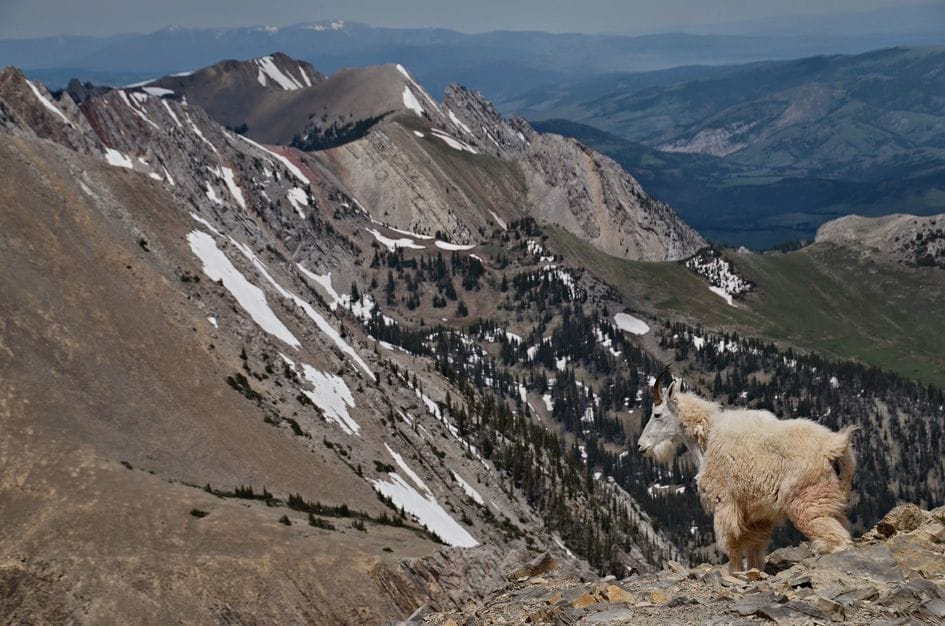
Drivers along the canyon are regularly treated to views of bighorn sheep, and in winter they come right down to the highway shoulder to lick road salt. MDT has documented the Spanish Peaks herd coming to Highway 191 specifically for the sodium chloride used for de-icing, and there’s a flashing “Bighorn Sheep Crossing” sign near milepost 55. In summer they move to the cliff faces in the canyon walls, so look up, not just roadside. The stretch of canyon between the Big Sky turnoff and the Gallatin Gateway area is the most reliable zone year-round.

Elk
Elk graze in the low-elevation meadows that run alongside the river and highway. The meadow openings between pull-offs along the Gallatin River are your best bets. Dawn and dusk, always. Fall rutting season (September through October) is the most spectacular time to see elk in the canyon. Bull elk bugling echoes off the canyon walls and you can hear it from the road with your windows down. If you’ve never heard an elk bugle in person, it’s a sound you won’t forget.

Moose
Look at willow thickets and marshy areas along the river’s edge, not in the open. Moose are browsers and they love the dense vegetation along creek confluences where willows grow thick. The area near Red Cliff Campground, about 46 miles south of Bozeman on Highway 191, is one of the most consistent spots for moose sightings. Early morning and dusk, same as everything else.

Bald Eagles and Osprey
Bald eagles are regularly visible along the canyon, particularly near the river. Watch for them perched in large dead snags above the water or soaring along the canyon walls. Osprey are common in summer, diving for trout in the Gallatin River. The fishing access pull-offs along 191 are good spots to scan the treetops for raptors. You don’t need binoculars to spot an eagle, but you do need to be looking up.
Grizzly and Black Bears
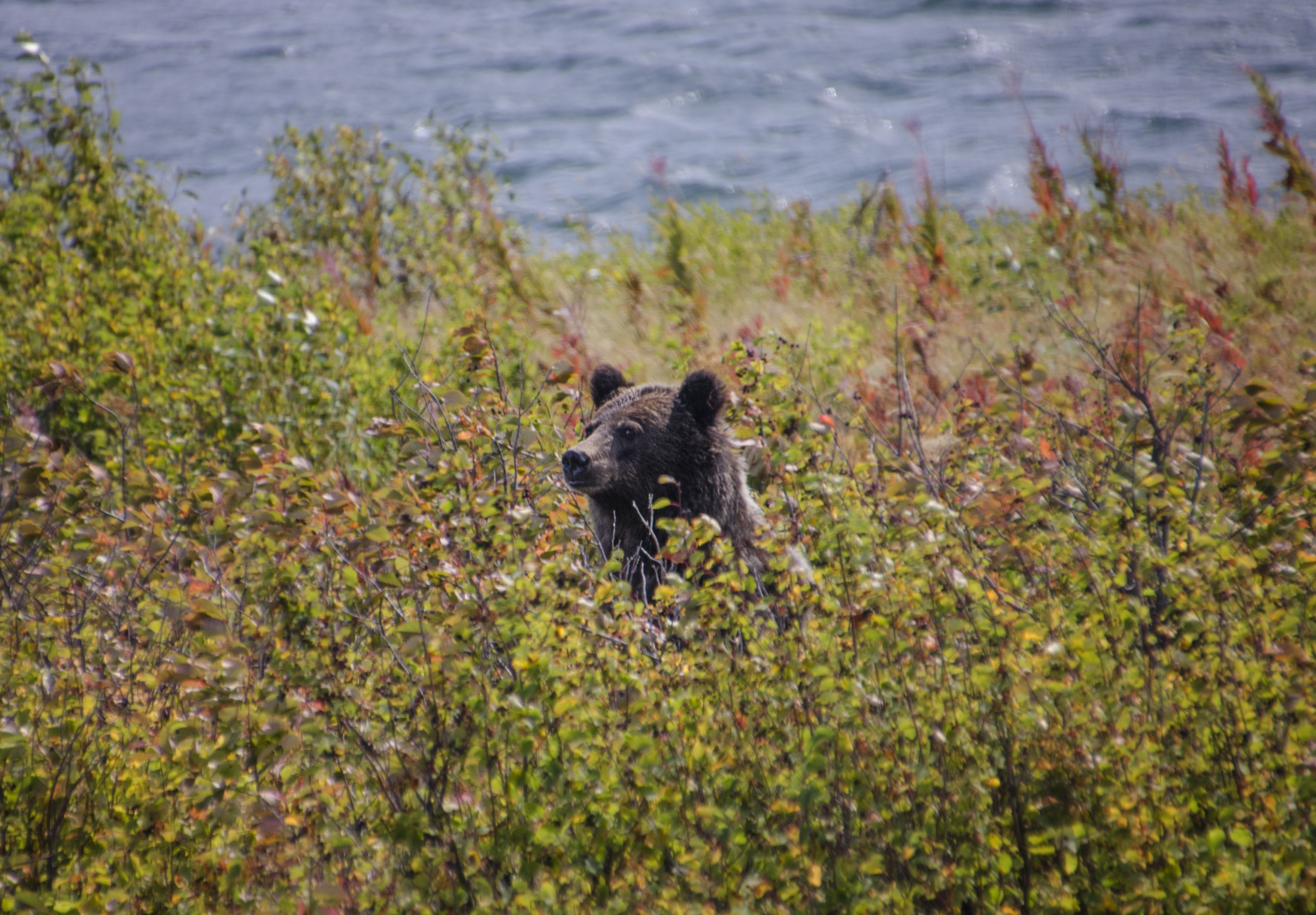
Bears are present throughout the canyon but harder to predict than elk or sheep. The best viewing windows are late May through early June (post-hibernation, mothers with cubs in meadows) and late August through early October (hyperphagia feeding frenzy before winter). If you see a cluster of cars pulled over on the shoulder with people pointing cameras, that’s your cue. The informal “wildlife jam” is a real thing in the Gallatin Canyon, just like in Yellowstone. Slow down and look.

The Pull-Off Strategy
Don’t stop at the first pull-off you see. Drive slowly with your windows down and scan ahead for animals in the meadow openings, then pull over safely when you spot something. Highway 191 is one of Montana’s busiest two-lane roads, and over 1,800 elk and deer were killed in wildlife-vehicle collisions between 2012 and 2020 on this stretch alone. Pull completely off the road, turn on your hazards if you’re stopping on a curve, and keep your noise down. The animals won’t stick around if you slam your door and start yelling.


The Hebgen Lake Loop: Wolves, Bison, and Almost Nobody Else
This is the move that most visitors don’t know about. Head south past Big Sky on Highway 191 toward West Yellowstone, then turn west on Highway 287 toward Hebgen Lake. This loop gives you Yellowstone-quality wildlife viewing without the park entry fee, without the crowds, and without the traffic.
The Hebgen Lake Road runs along the lakeshore with mountain reflections in the water and pull-outs every few miles. Moose and grizzly bears have been spotted along the lakeshore. Continue around to the Madison River arm where the river enters the lake. This wetland transition zone is excellent for moose, waterfowl, and occasional wolf activity. Yellowstone wolves range beyond the park boundary into the Hebgen Basin, and Montana FWP estimates around 173 wolves in the southwest Montana region.

The biggest draw here is bison. Horse Butte peninsula, which extends into Hebgen Lake just north of West Yellowstone, is a traditional spring calving ground for Yellowstone’s central bison herd. Bison migrate out of the park to the Hebgen Basin at the end of winter, typically flooding the area by the end of March, with calving running from mid-April through May. You can watch wild bison from the road without a park pass.
Earthquake Lake is along this route too. The free USFS visitor center tells the story of the 1959 earthquake that moved 80 million tons of rock in under a minute, damming the Madison River and creating the lake. 28 people died that night. The submerged “ghost forest” of dead snags is still visible standing in the water, with cormorants perching on the limbs. Worth a stop, and it pairs naturally with the Hebgen loop. The visitor center is open late May through mid-September.
Wildlife Safety: The Stuff That Actually Matters
This is grizzly country and the Gallatin Canyon has one of the higher densities of human-wildlife conflict in Montana. Don’t skip this section.
Bear spray is non-negotiable any time you leave your vehicle, even at roadside pull-offs near willows. Keep it on your hip or in a chest holster, not buried in your bag. We have a full bear spray guide if you want the details.
Distance rules: 100 yards minimum from bears and wolves, 25 yards from elk, moose, bison, and deer. These are not suggestions. Bull elk during the rut will charge. Cow moose with calves are genuinely dangerous and they don’t always bluff.
Driving at dawn and dusk is when you’ll see the most wildlife, but these are also the most dangerous driving conditions on Highway 191. Vehicle crashes on this stretch increased 130% between 2009 and 2018. Use high beams when there’s no oncoming traffic, slow down significantly after dark, and scan the road edges constantly.
If you see a moose in a willow thicket close to the road, don’t get out. Moose bluff-charge and sometimes don’t stop. Watch from the car.
Wildlife jam etiquette: pull completely off the road, don’t crowd the animal, and don’t try to get it to look at you for a photo. The photo you get from a respectful distance with a decent zoom lens is the photo worth having.

Gear That Makes the Difference
You don’t need much, but a few things make a huge difference in what you actually see.
- Binoculars: 8x42 is the sweet spot for the canyon. Even a $50 pair will transform the experience. You will miss most of what’s out there without them.
- A spotting scope if you’re serious about finding bears and wolves. A window mount lets you glass meadows from your vehicle without getting out.
- Offline maps: Cell service disappears in the canyon. Download Gaia GPS or OnX maps before you leave Bozeman so you know where the pull-offs are and what land you’re on.
- A thermos. You’ll be parked at a pull-off at 5:30am in the dark waiting for first light. Coffee matters.
The Honest Pitch
You don’t need a guide, a tour van, or a $200 ticket to see wildlife near Big Sky. You need a free road, a thermos, and to be out before breakfast. The Gallatin Canyon is right there, the animals are wild, and the whole thing costs nothing.
If you’re planning a Big Sky trip on a budget, pair this guide with our free dispersed camping guide and you can sleep for free the night before, wake up at dawn, and start scanning meadows before you even get to town. Our Big Sky budget guide covers the rest.