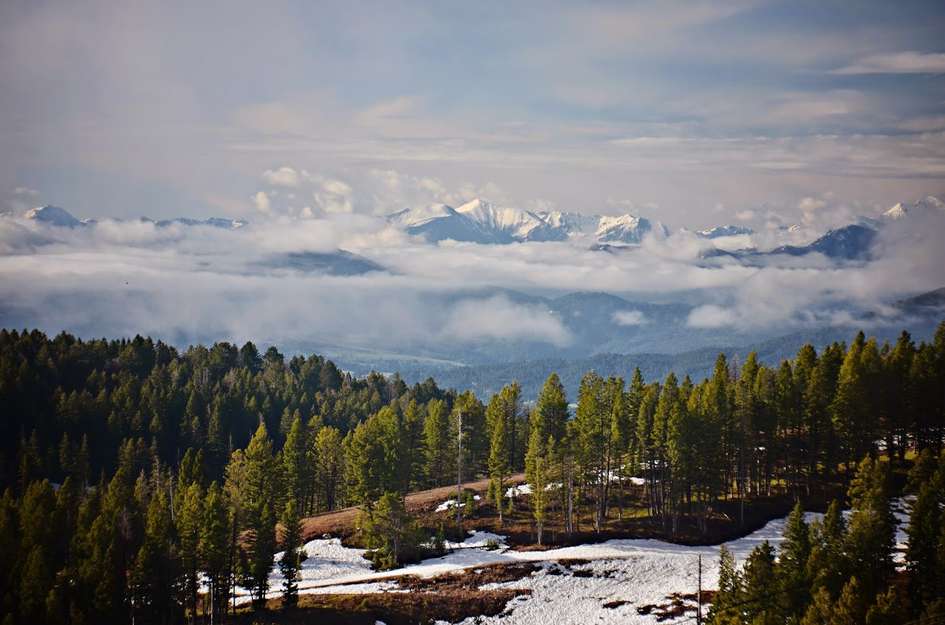
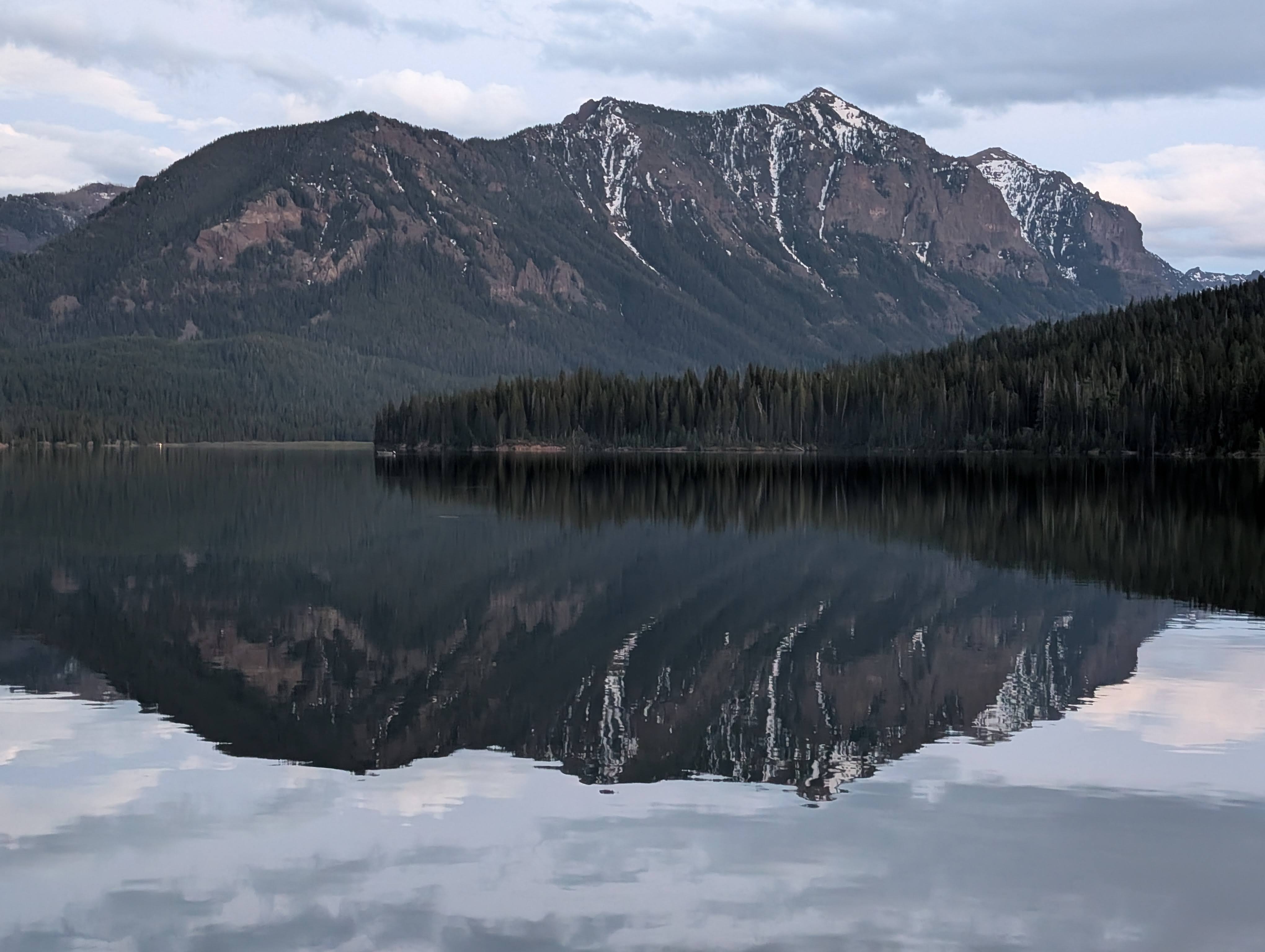
If you ask a Bozemanite where to go for just about any outdoor activity, there’s a good chance they’ll say Hyalite. If you’re searching for Hyalite Reservoir waterfall hikes, camping, fishing, winter access, or the spring road closure, this is the Bozeman canyon you’re looking for. Hiking, camping, fishing, boating, ice climbing, backcountry skiing, mountain biking, it’s all here, 12 miles from downtown.
Hyalite Canyon is the most heavily visited Forest Service recreation area in Montana, seeing more visitors than any other spot in the state’s national forests. On summer weekends, the parking lots fill up early and the trails get crowded, but the canyon is big enough that you can still find solitude if you know where to look.
The reservoir itself sits at 6,700 feet and covers about 206 acres. Beyond the water, 34,000 acres of the Gallatin Range stretch south toward the Hyalite-Porcupine-Buffalo Horn Wilderness Study Area. That wilderness connects all the way to Yellowstone National Park. You can actually backpack from the Grotto Falls trailhead to the northern boundary of Yellowstone if you’re up for a multi-day trip along the Gallatin Crest.
In this guide: The Trails · Wildlife · Camping · On the Water · Fishing · Biking · Winter Recreation · Getting There


The Trails
Hyalite has more hiking options than you can knock out in a summer. Half-mile strolls to waterfalls, all-day slogs to 10,000-foot peaks, alpine lakes, wildflower meadows, dense forest, open ridgelines. Whatever you’re looking for, it’s probably here. If waterfalls are the main goal, use the Best Waterfall Hikes Near Bozeman planner to compare Palisade and Grotto with Big Sky, Paradise Valley, and farther-afield options. The Beartooth Publishing Bozeman Area Map covers the whole area from Sacagawea Peak down to Hyalite Peak and is worth picking up before you head out.
Some trails operate on a timeshare system to separate hikers from bikes and dirt bikes. The main Hyalite Creek Trail is hiking and horses only on Fridays and Saturdays from July 16 through September 4, with bikes and dirt bikes allowed Sunday through Thursday. The East Fork to Emerald Lake has different days, so check the Friends of Hyalite website before you go. E-bikes are treated as motor vehicles and follow the same restrictions as dirt bikes.
Day Hikes
Palisade Falls is the most popular trail in the canyon, half a mile on pavement to an 80-foot waterfall. It’s great for kids, wheelchair accessible, and packed with people on summer weekends, so arrive early to nab a parking spot.
Grotto Falls is another easy option at 2.5 miles round-trip on a wide, mostly flat trail that’s also wheelchair accessible, ending at a waterfall that cascades into a pool.
Hyalite Creek Trail to Hyalite Lake is the big one. 11 miles round-trip with about 2,000 feet of elevation gain. You’ll pass multiple waterfalls on the way up. Averaging about 2 miles per hour, you’ll get to the lake in around 3 hours. Plan to spend time at the lake, eating lunch, fishing, and if it’s warm enough, taking a swim.
Hyalite Peak is an extension of the Hyalite Lake hike for those wanting a bigger day. It’s 7.5 miles one way with 3,400 feet of elevation gain. From the 10,299-foot summit you can see the Bridgers, the Crazies, the Spanish Peaks, and on clear days, the Beartooths.
Blackmore Lake is 4 miles round-trip to a quieter lake with fewer crowds.
Mount Blackmore is another 10,000-footer, 11.6 miles round-trip with 3,300 feet of gain. The trail passes Blackmore Lake on the way up.
Emerald and Heather Lakes via the East Fork trail is 9 miles round-trip. Two alpine lakes between Mount Chisholm and Overlook Mountain.
History Rock is a quick 2.4-mile hike to a rock outcropping where settlers, prospectors, and a scout for George Custer carved their names. Good for days when you don’t have much time.
Beyond the marked trails, the gated forest roads above the reservoir are great for casual strolls or biking. There’s a whole network of Forest Service roads throughout the canyon waiting to be explored.
Wildflowers and Foraging
Wildflowers peak in July and early August. The meadows along the East Fork and around the alpine lakes fill up with lupine, Indian paintbrush, arnica, and columbine. The higher you go, the later the bloom.
Berry picking is good throughout the summer. Wild strawberries show up first in late June and July along sunny trail edges. Raspberries and thimbleberries ripen in mid-summer. Huckleberries and whortleberries come in late August and early September on shaded slopes. Bring a container and wander off the main trails. Locals guard their favorite spots, but the canyon is big enough that you’ll find your own.
Geocachers will find plenty of caches hidden throughout the canyon. Good excuse to explore trails you might otherwise skip.


Wildlife
Hyalite sits in a major wildlife corridor connecting the Gallatin Range to the greater Yellowstone ecosystem.
Mule deer, elk, and moose are all commonly seen. Mule deer are everywhere, in the campgrounds, along the road, grazing in the meadows above the reservoir. White-tailed deer stick to the lower canyon. Elk move through seasonally, more often in spring and fall when transitioning between summer and winter range. Listen for bugles in September if you’re camping during the rut. Moose browse the willows along Hyalite Creek and around the reservoir’s edges, especially in the early morning and evening.
Black bears are common throughout the canyon. Grizzlies pass through too, particularly in spring and fall. The same slopes where you’re picking huckleberries are prime bear habitat.
Up high, mountain goats pick their way across the rocky faces above Hyalite Lake and along the Gallatin Crest. Bighorn sheep are less common but show up on the open slopes. Marmots sun themselves on the talus fields and will whistle at you as you pass. Pikas live in the same boulder fields but are harder to spot.
Birders will find osprey hunting over the reservoir, red-tailed hawks circling the thermals above the ridges, and in the forest, Steller’s jays, Clark’s nutcrackers, and the occasional pileated woodpecker hammering away at a dead snag. Early risers might catch a great horned owl heading home.


Camping
Frontcountry Campgrounds
Three developed campgrounds operate from May 15 through September 15. All are reservable through Recreation.gov.
Hood Creek Campground has 25 sites right on the reservoir with a boat ramp on site. Some sites are in open meadows along the water, others are tucked in the trees. This is the most popular campground. It fills up fast on summer weekends, so book early.
Chisholm Campground has 10 sites at the south end of the reservoir, closer to the trailheads and quieter than Hood Creek.
Langohr Campground is located lower in the canyon along Hyalite Creek, away from the reservoir. It has 19 sites and is good for fishing access and wildlife watching. There’s a short creekside trail right from camp.
Bears are active throughout the canyon. All campgrounds require proper food storage. Bring approved bear-resistant containers or use the food storage lockers if available.
Dispersed Camping
Dispersed camping is allowed throughout the canyon. If you’re new to dispersed camping, the Forest Service has a good overview of the rules and etiquette. Within a half-mile of the main Hyalite road and East Fork road, you’re restricted to designated sites marked with carsonite posts showing a tent symbol. Outside that zone, more options open up. If you’re backpacking into the wilderness study area, you can camp just about anywhere following Leave No Trace principles.
If you’re camping overnight, stick around after dark. The canyon is far enough from Bozeman’s lights that the night sky is excellent. On a clear night in late summer you’ll catch the Milky Way stretched across the peaks.


The Pavilion and Day Use Area
The Hyalite Day Use Area has a large parking lot, accessible vault toilets, and drinking water. The pavilion itself is a 20 by 50 foot covered structure with three permanent picnic tables, two barbecue grills, a fireplace, and an outdoor fire ring. It holds up to 80 people and can be reserved for $170, or used first-come, first-served when not reserved.
This is the main staging area for boating and paddling. You can launch kayaks, canoes, and paddleboards right from here.
On the Water
The reservoir sees motorboats, sailboats, canoes, kayaks, and stand-up paddleboards on summer days. A no-wake rule keeps things calm, so you can troll with a motor at low speed, but no waterskiing or tubing. The boat ramp is at Hood Creek, while the day use area works for launching smaller craft.
Swimming is popular on hot days, and the water stays cold, but on a 90-degree afternoon you won’t mind. There’s no official beach, but people swim from the shore near the day use area.


Fishing
The Reservoir holds Yellowstone cutthroat, rainbow trout, brook trout, and Arctic grayling according to Montana FWP. Check the regulations for current limits. A recent study found that almost 90% of the Yellowstone cutthroat in the reservoir are wild fish, so FWP has stopped stocking and transitioned to a wild trout fishery. Fishing from shore is possible, but a float tube or small boat helps you reach better water.
Hyalite Creek below the reservoir is small water with quick fish, expect rainbows, cutthroat, and browns mostly in the 6 to 10 inch range, with occasional fish up to 16 inches in the deeper pools. The creek runs right along the road for easy access, though you’ll want a short rod and be ready to cast tight to the banks.
The East Fork above the reservoir is open July 15 through November 30 to protect spawning fish, and cutthroat trout are catch-and-release in all streams. This is where you’ll find larger cutthroat, though it’s a longer hike in, but the fishing pressure drops off fast.
Check the Montana FWP fishing regulations before you go. The rules can be specific to each water body.


Biking
Hyalite has options ranging from mellow road rides to steep singletrack. Hyalite Canyon Road itself makes a solid road bike ride. From mid-April to mid-May, the road is closed to motor vehicles but open to bikes. It’s about 16 miles round-trip from the gate to the reservoir with 1,200 feet of climbing on smooth pavement.
Hyalite Creek Trail and the East Fork Trail to Emerald Lake are the classic singletrack rides. Both trails are subject to the timeshare system. No bikes on Fridays and Saturdays from mid-July through Labor Day.
Rock Climbing
The canyon has plenty of rock, with granite crags scattered throughout if you know where to look. Check with local climbing shops in Bozeman for current route info.
Winter Recreation
Winter is when Hyalite really shines. Since the Forest Service started plowing the road in 2008, the canyon has become an international destination.
Hyalite is also a popular spot to cut your own Christmas tree. You’ll need a permit from the Forest Service, available at the Bozeman Ranger District office or online. Make a day of it with a thermos of hot cocoa and a sled for the kids.
Ice Climbing
Hyalite is one of the top ice climbing destinations in the country, with over 250 routes ranging from WI2 to WI6. When temperatures drop, the waterfalls along the canyon walls freeze into massive ice columns. Routes like Mummy Cooler, Genesis, Winter Dance, and Cleopatra’s Needle draw climbers from around the world.
The Bozeman Ice Festival happens here every December. 2026 marks the 30th anniversary. Most routes are accessed from the Grotto Falls parking lot, which stays plowed through March 31.
Cross-Country Skiing
Over 30 kilometers of groomed Nordic trails wind through the canyon. The Bridger Ski Foundation helps the Forest Service with grooming. Most trails are better suited to classic skiing due to narrow sections, though the routes from Moser Trailhead toward Mystic Lake and into Sourdough Canyon work well for skate skiing.
Trailheads are at Lick Creek, History Rock, Blackmore, and the reservoir day use area. The trails connect, so you can put together loops of varying distances. Check the grooming report before you head up. The Hyalite trails typically get groomed once a week or so.
Bridger Ski Foundation has a voluntary trail pass program that funds grooming. Day passes are $15. If you ski regularly, consider the annual membership.
Backcountry Skiing
Beyond the groomed trails, the alpine bowls above the canyon hold snow from December through May. Most backcountry skiers park at Lick Creek, History Rock, Chisholm, or Grotto Falls.
History Rock is a good beginner zone with low-angle terrain and consistent traffic that consolidates the snowpack, making it a great place for a quick tour when you don’t have all day. The East Fork drainage leads to the Emerald Lake area and is a longer tour, better suited for an overnight or early-season mission. Flanders is more accessible for day trips, while Grotto Falls provides access to the main Hyalite drainage toward Hyalite Peak with side basins along the way.
Montana Alpine Guides is the only permitted guide service in the canyon if you want professional instruction or avalanche safety courses. All their guides have professional avalanche and medical training.

Backpacking into Yellowstone
The Hyalite-Porcupine-Buffalo Horn Wilderness Study Area stretches from the upper reaches of the canyon all the way to Yellowstone National Park. The Gallatin Crest Trail follows the ridgeline south, passing Hyalite Peak before dropping into the park.
A multi-day route: start at Grotto Falls, hike to Hyalite Lake, continue to the crest, tag Hyalite Peak, and keep going south. You’ll need a backcountry permit for any overnight stays once you enter Yellowstone. The wildlife corridor through here is active with elk, moose, mountain goats, bighorn sheep, and grizzlies.
Getting There
From Main Street in Bozeman, head south on 19th Avenue for 7 miles. The road curves right, then you’ll take a left to head south on Hyalite Canyon Road. Wind your way south until you hit the reservoir.
Be Advised: Hyalite Canyon Road is closed to motor vehicles annually from April 1 through May 15. The closure protects the road from damage during spring snowmelt when the road subsurface is soft. During this time, the road is open to bikes and foot traffic only.
Plan Your Trip
Just twelve miles from downtown Bozeman, Hyalite offers three campgrounds, dozens of trails, a reservoir for paddling and fishing, world-class ice climbing, over 30 kilometers of groomed ski trails, backcountry bowls, and a wildlife corridor to Yellowstone.
There’s a reason it’s the most visited recreation area in Montana’s national forests. Plan to arrive early on summer weekends, book campsite reservations well in advance, and if the main trails feel crowded, head up one of the forest roads or try a less popular drainage.
Frequently Asked Questions
Where is Hyalite Reservoir?
Hyalite Reservoir is south of Bozeman in Hyalite Canyon, about 12 miles from downtown. From Main Street, head south on 19th Avenue, then follow Hyalite Canyon Road to the reservoir.
When does Hyalite Canyon Road close?
Hyalite Canyon Road closes to motor vehicles every year from April 1 through May 15. The closure protects the road during spring snowmelt. During that window, the road is open to bikes and foot traffic only.
Can you camp at Hyalite Reservoir?
Yes. Hood Creek, Chisholm, and Langohr are developed campgrounds in the canyon, and dispersed camping is allowed in designated areas. If you want a reservable site, book early because summer weekends fill quickly.
What are the best hikes near Hyalite Reservoir?
Start with Palisade Falls if you want the shortest paved waterfall hike, Grotto Falls if you want an easy forest trail to a pool, and Hyalite Lake if you want the bigger all-day lake hike. For a side-by-side waterfall comparison, use the waterfall hikes near Bozeman planner.
Can you fish Hyalite Reservoir?
Yes. Montana FWP lists Yellowstone cutthroat, rainbow trout, brook trout, and Arctic grayling in the reservoir. Check the current Montana fishing regulations before you go.