
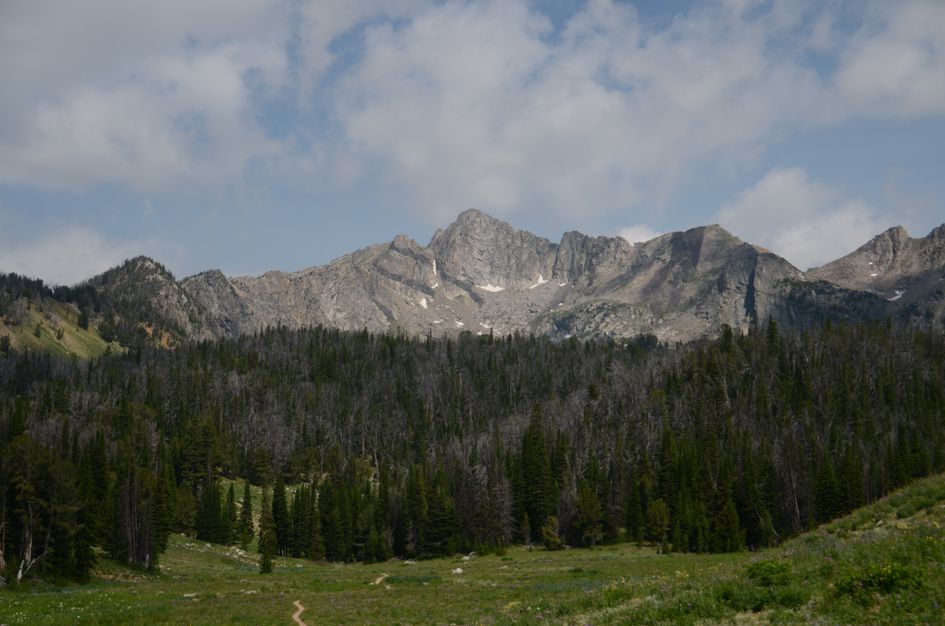
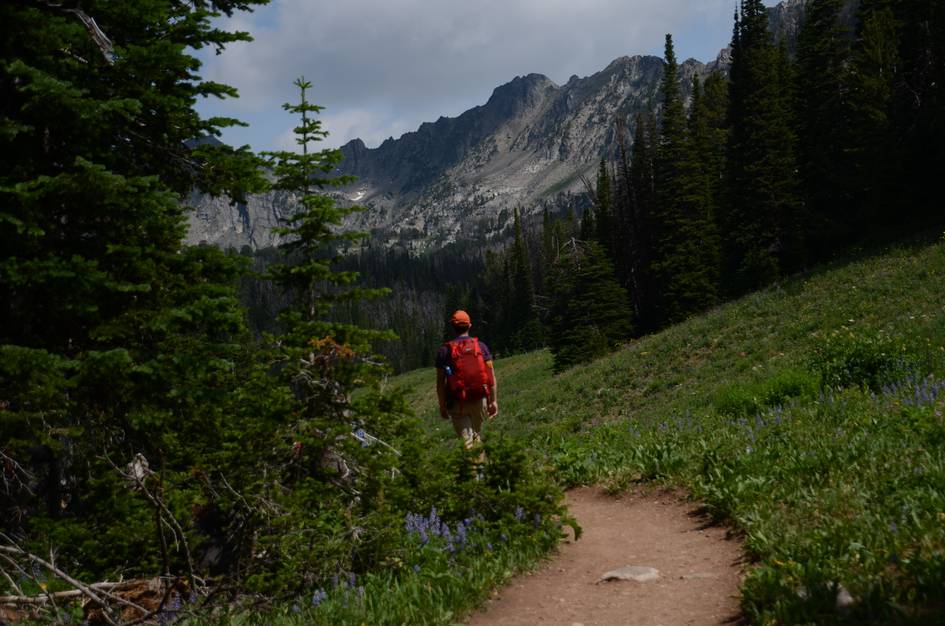
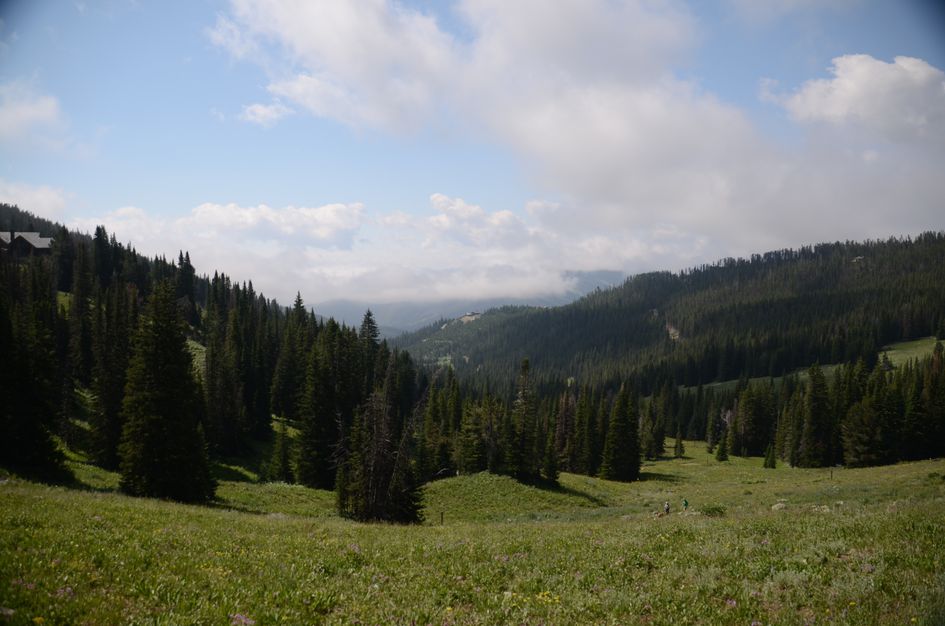
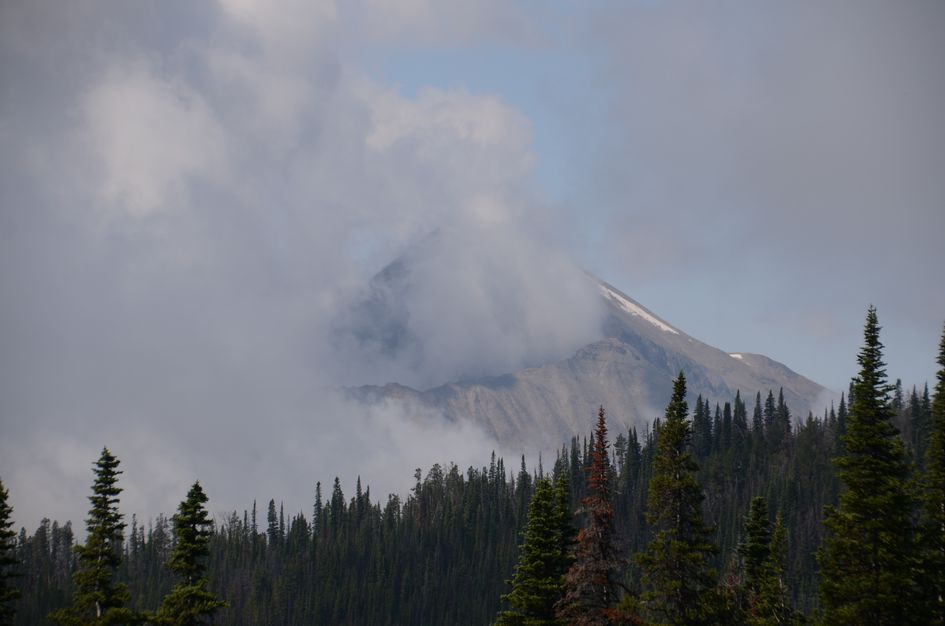
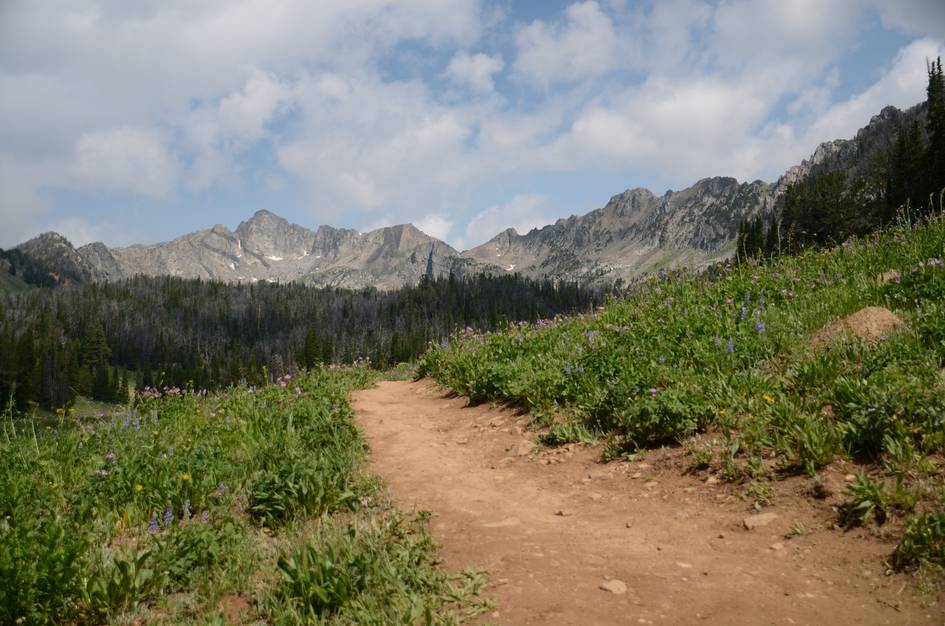
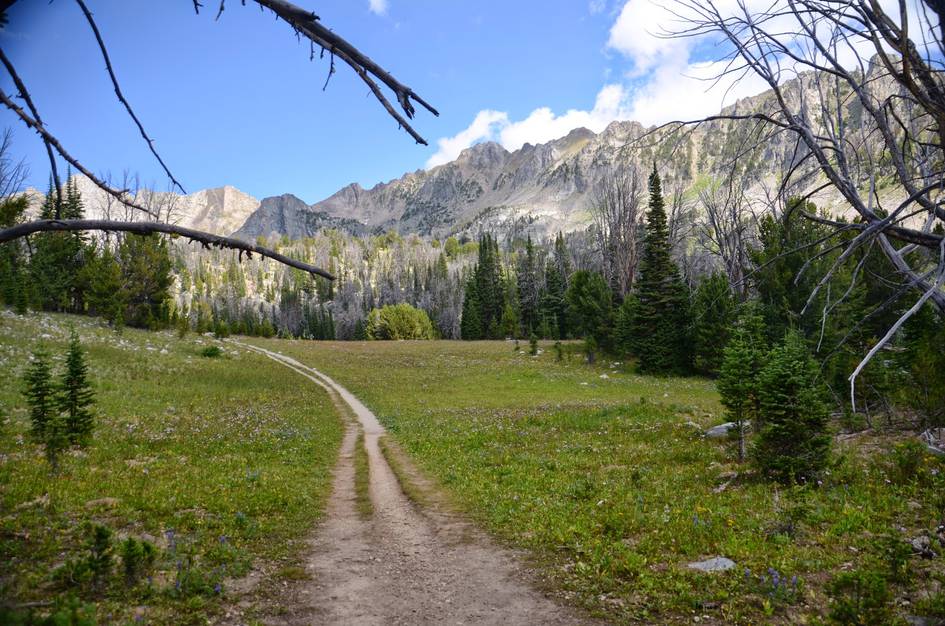
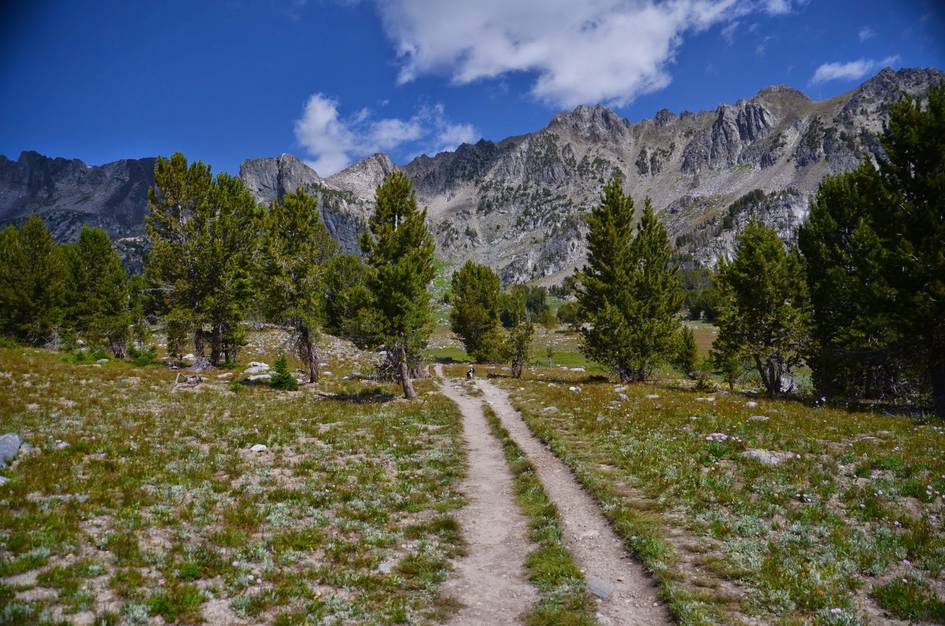
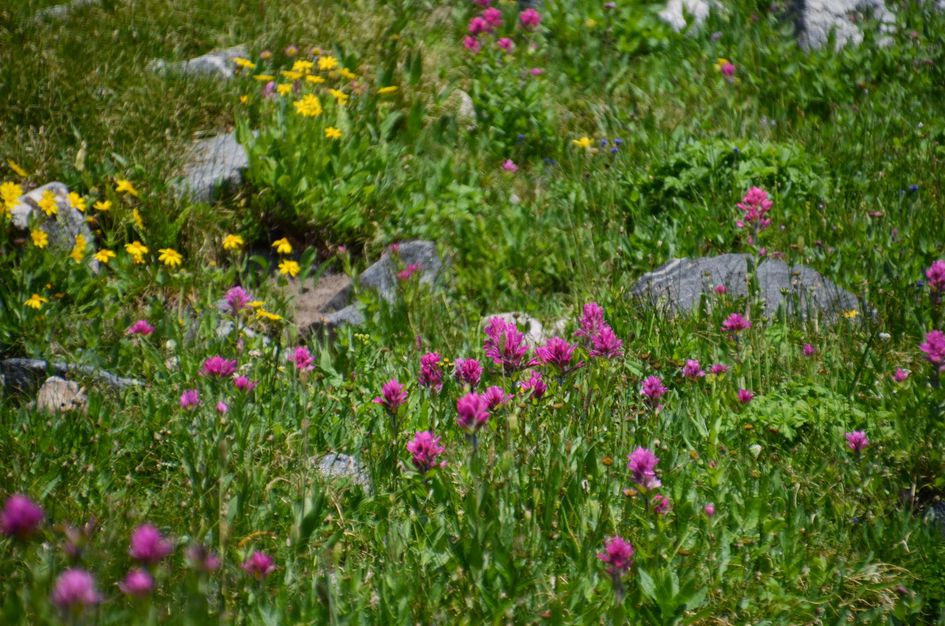
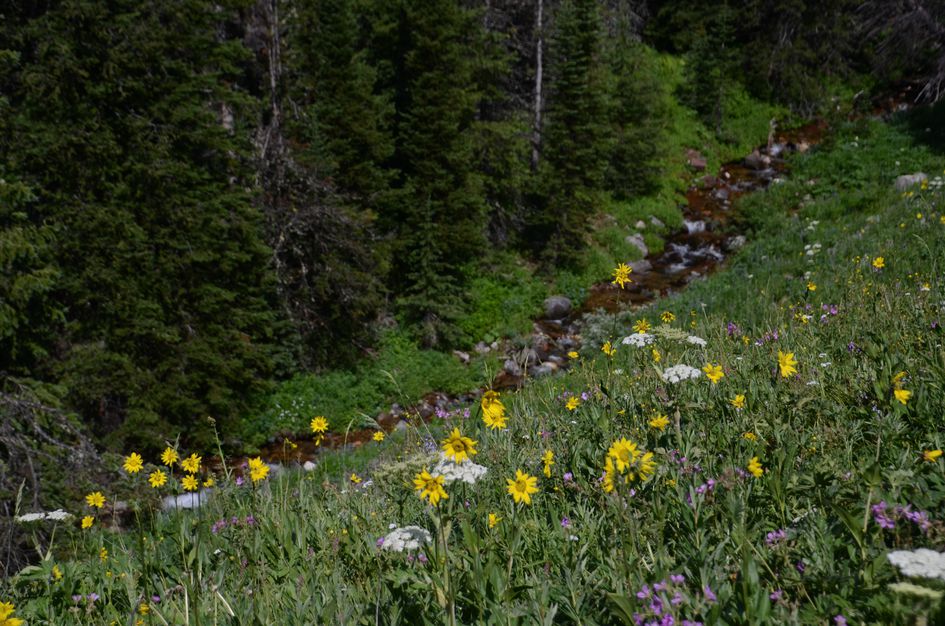
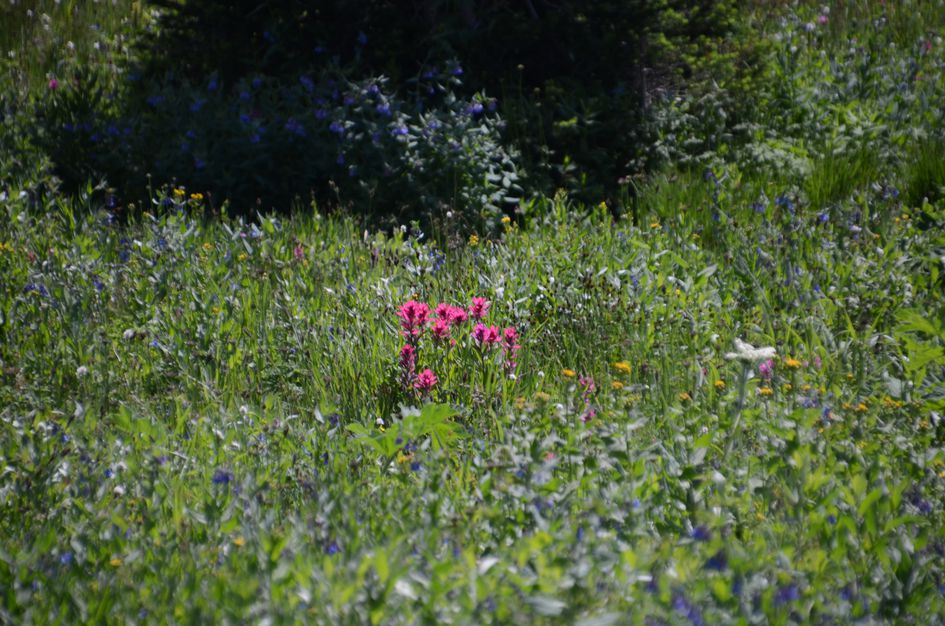
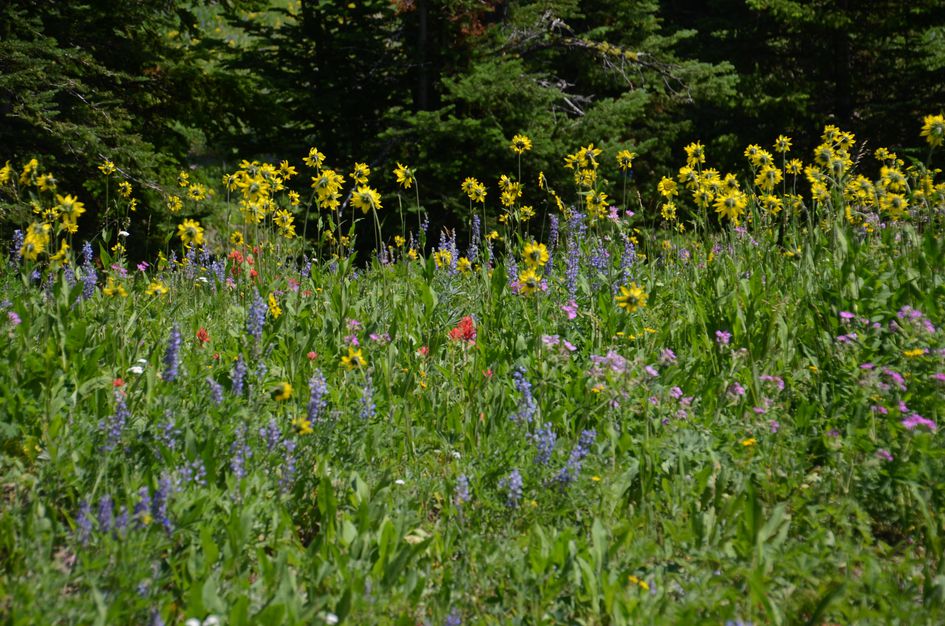
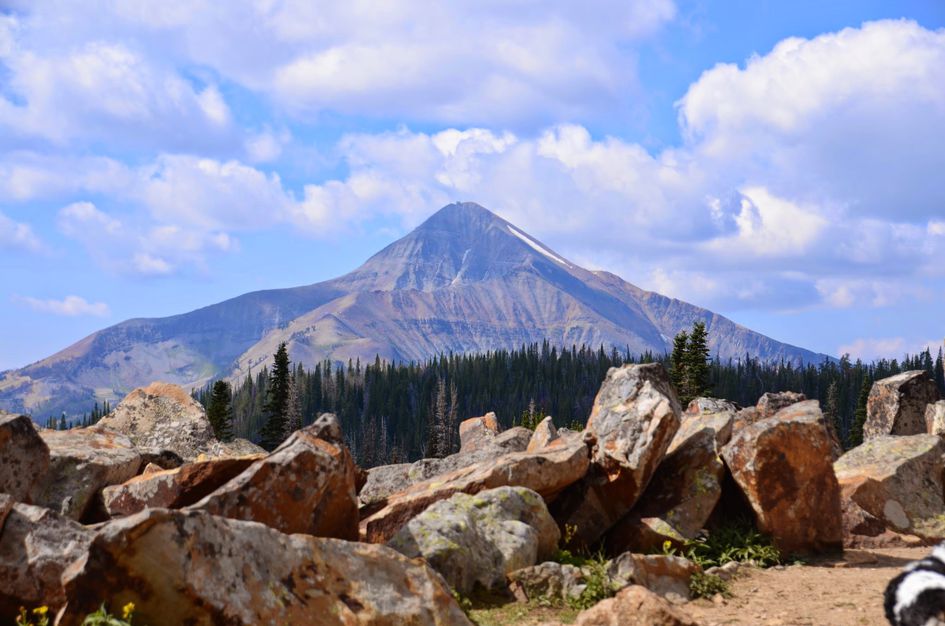
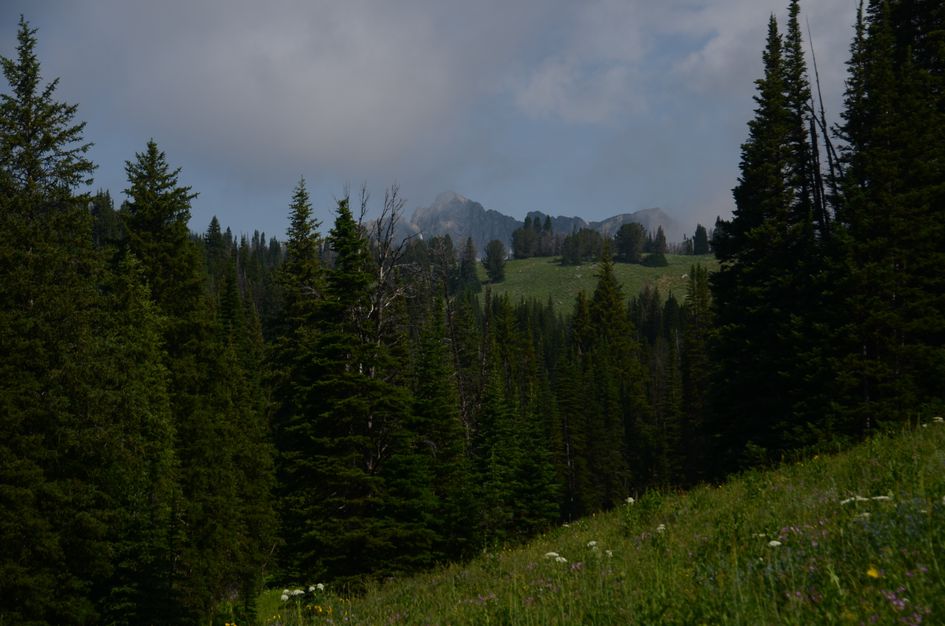
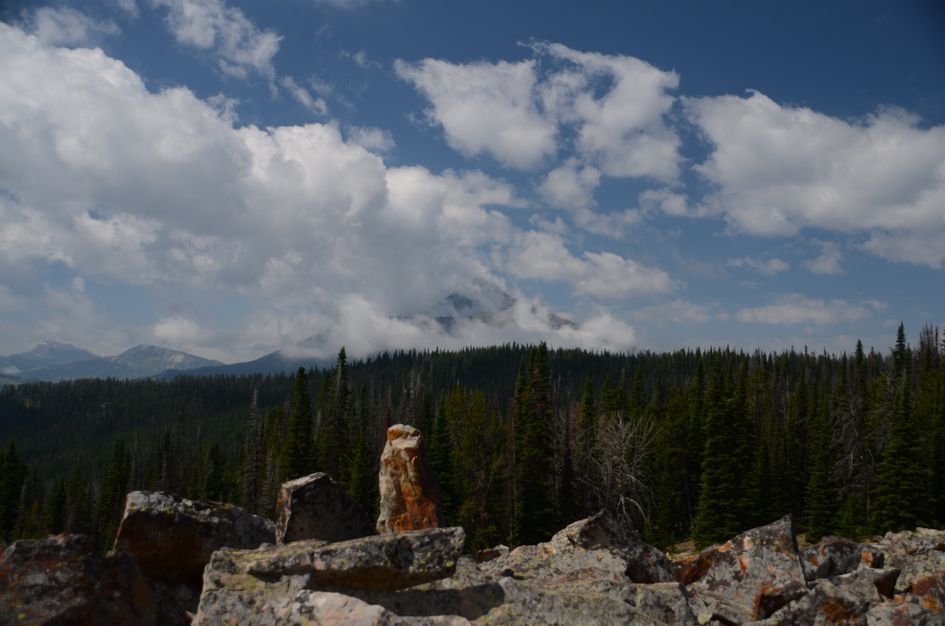
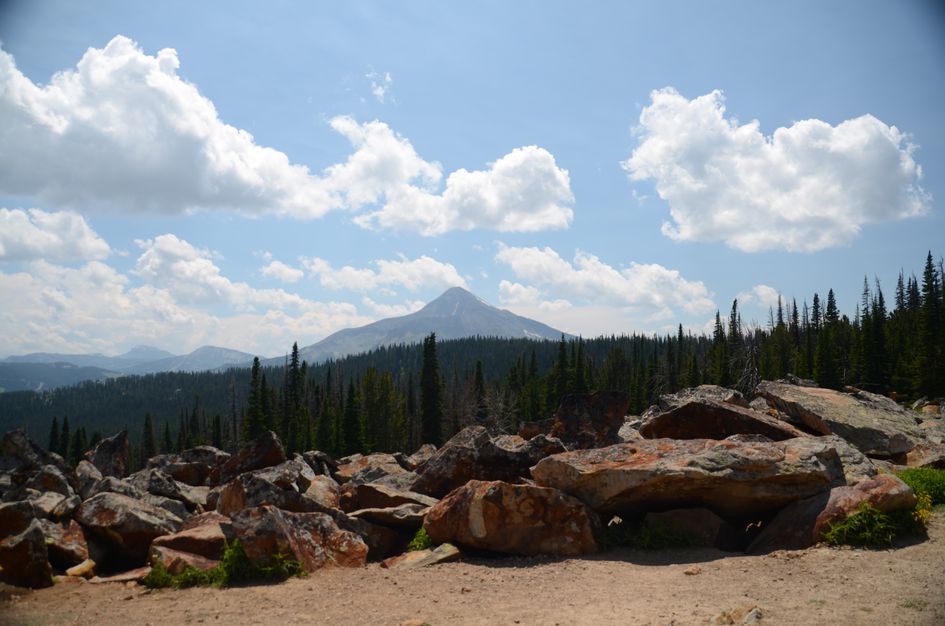
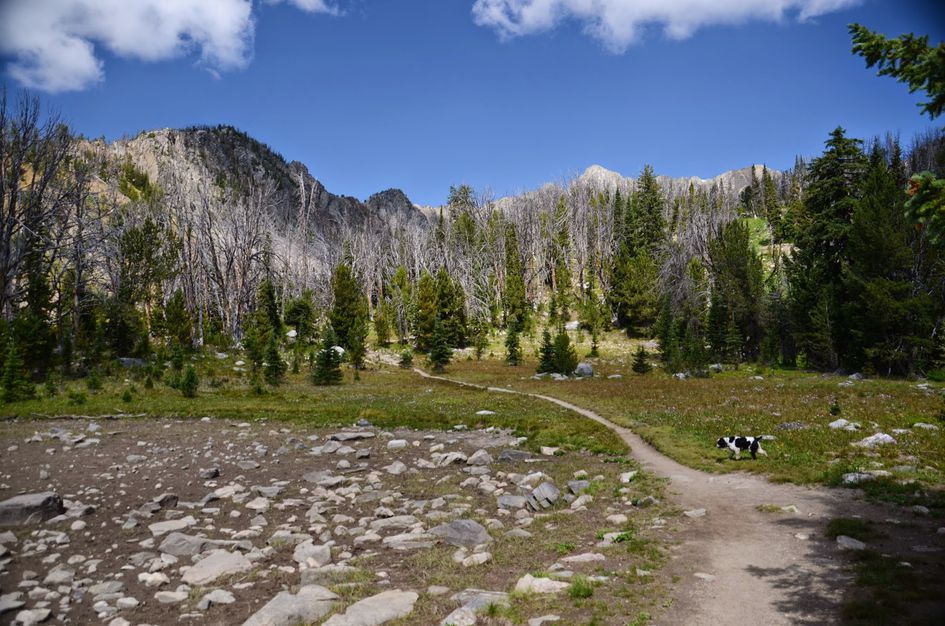
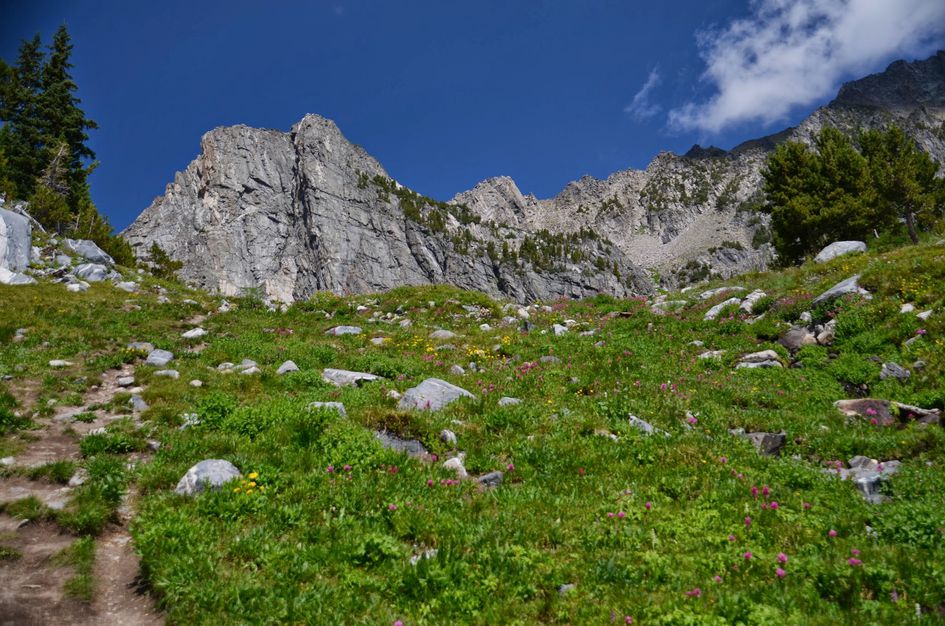
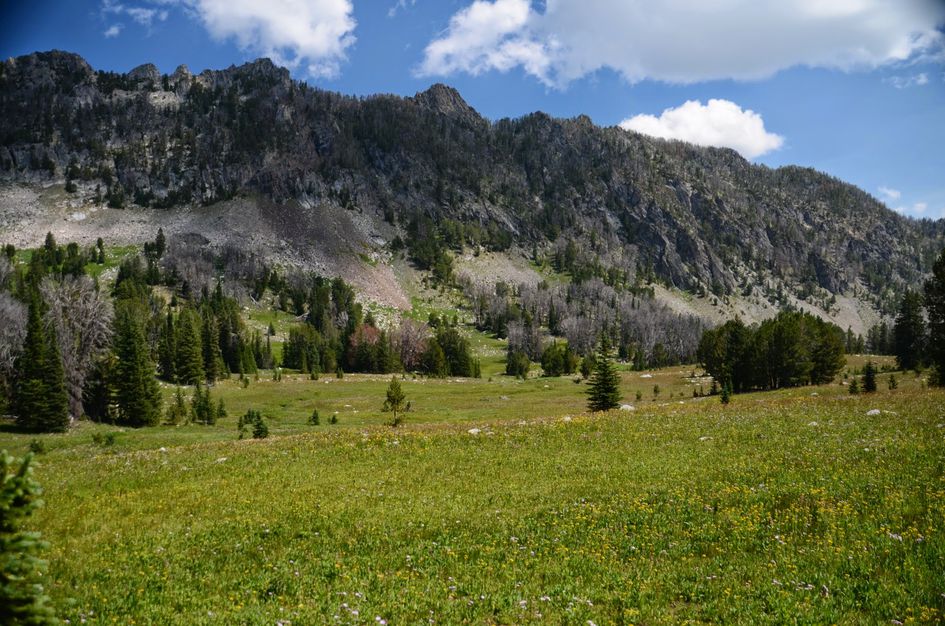
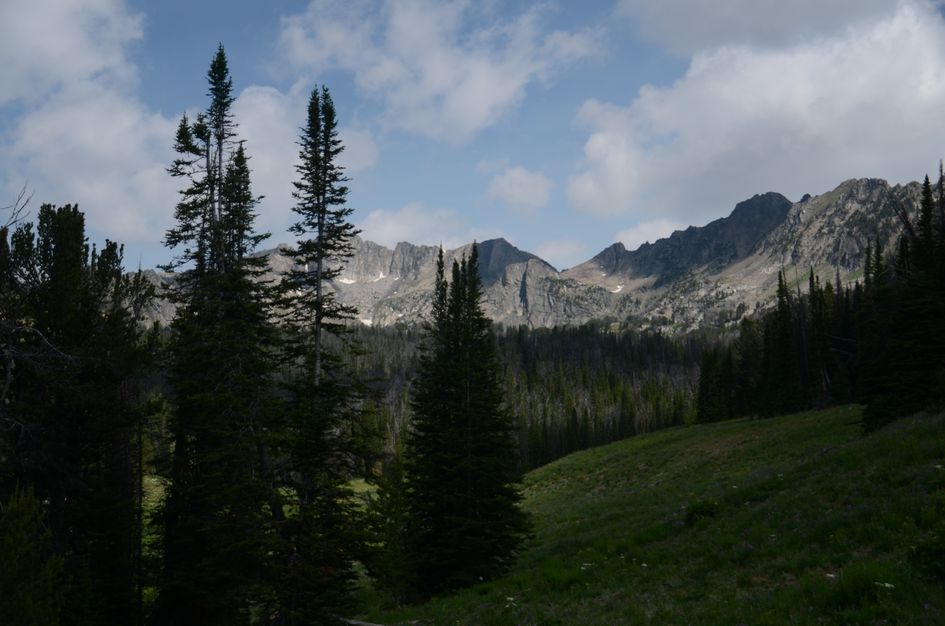
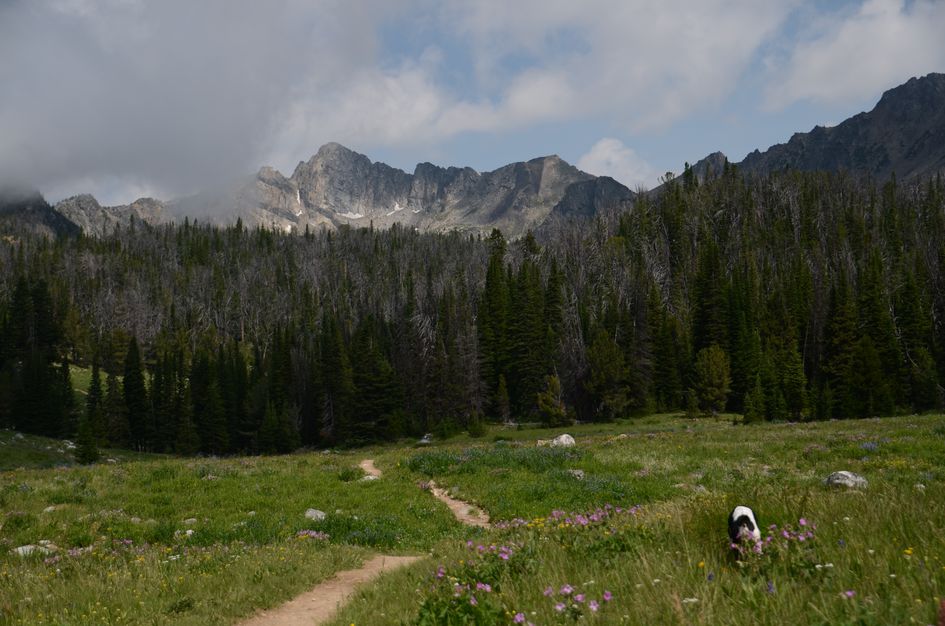
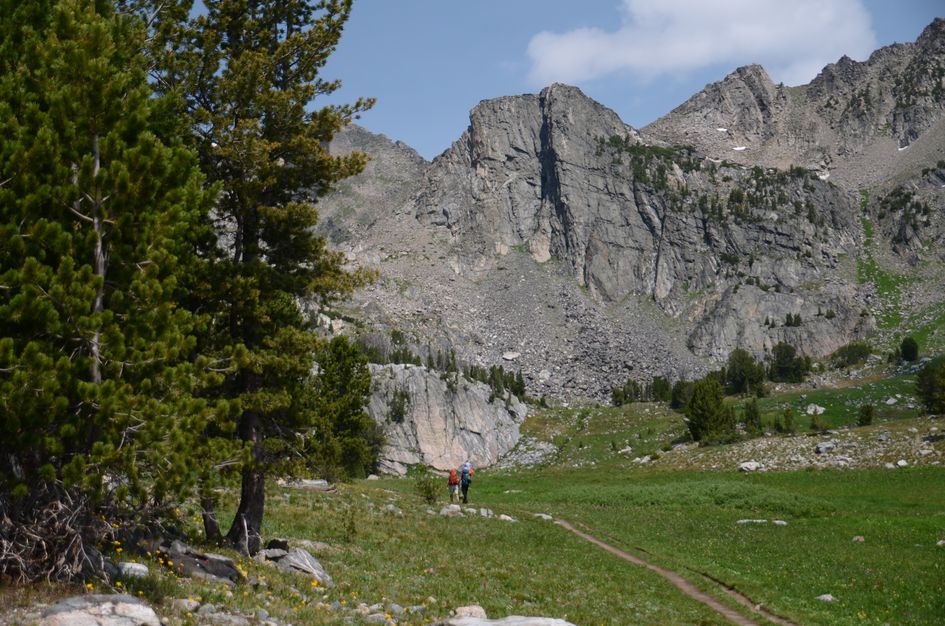
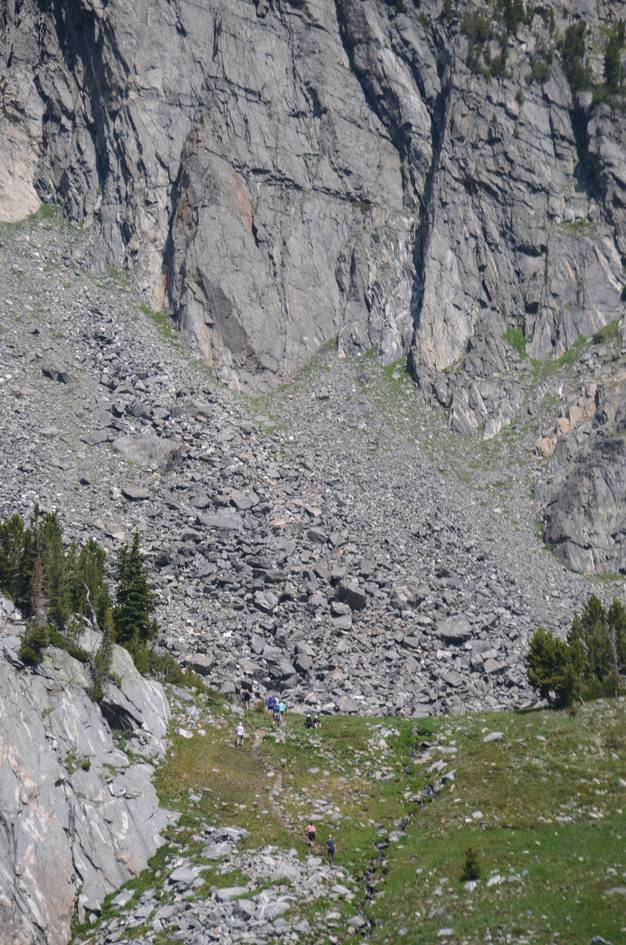
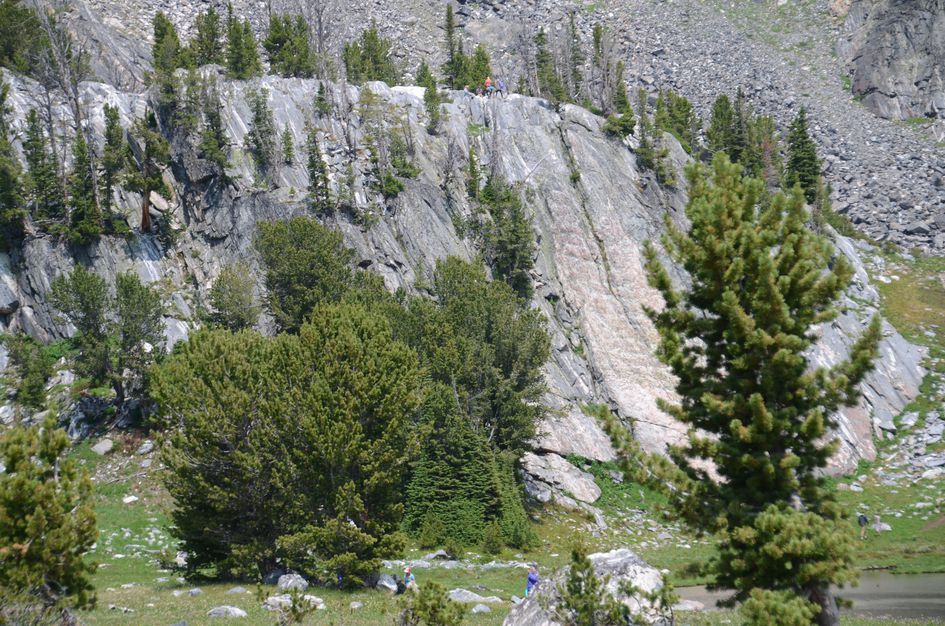
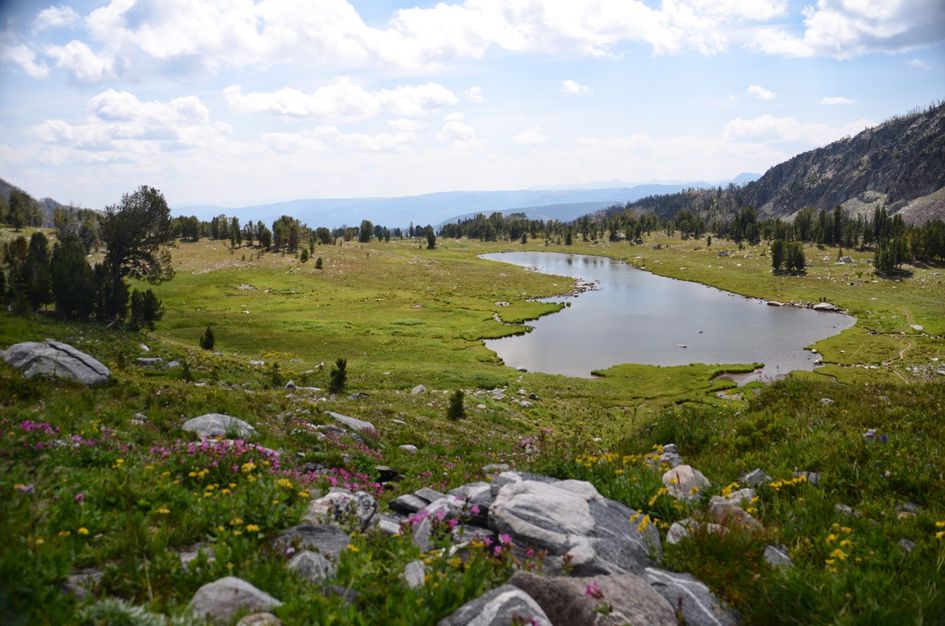
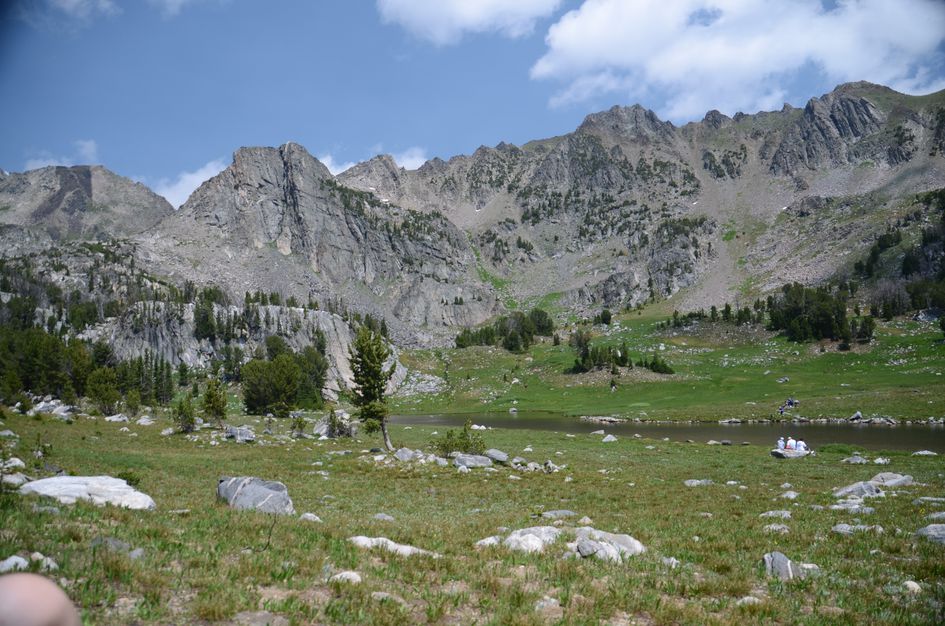
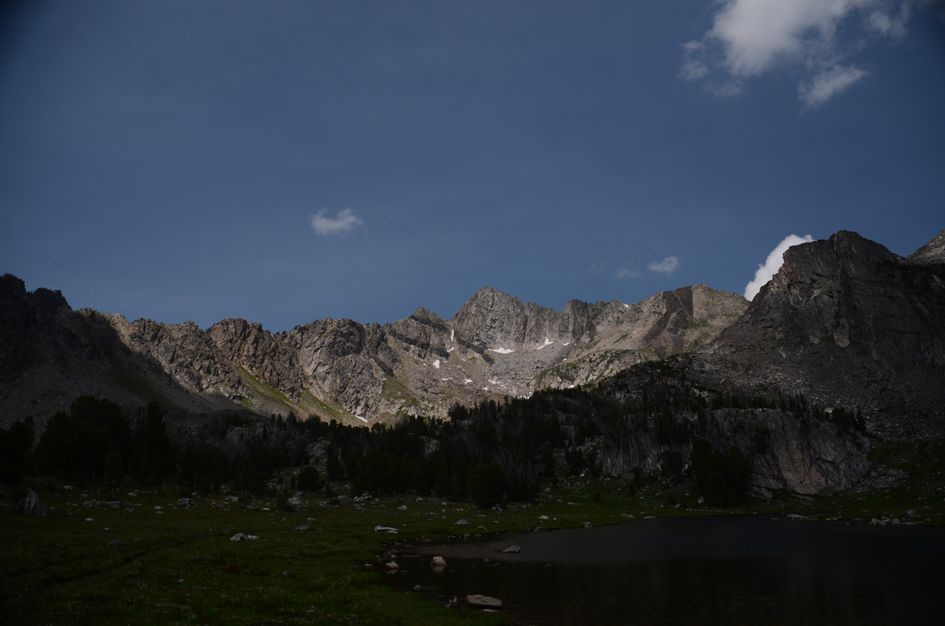
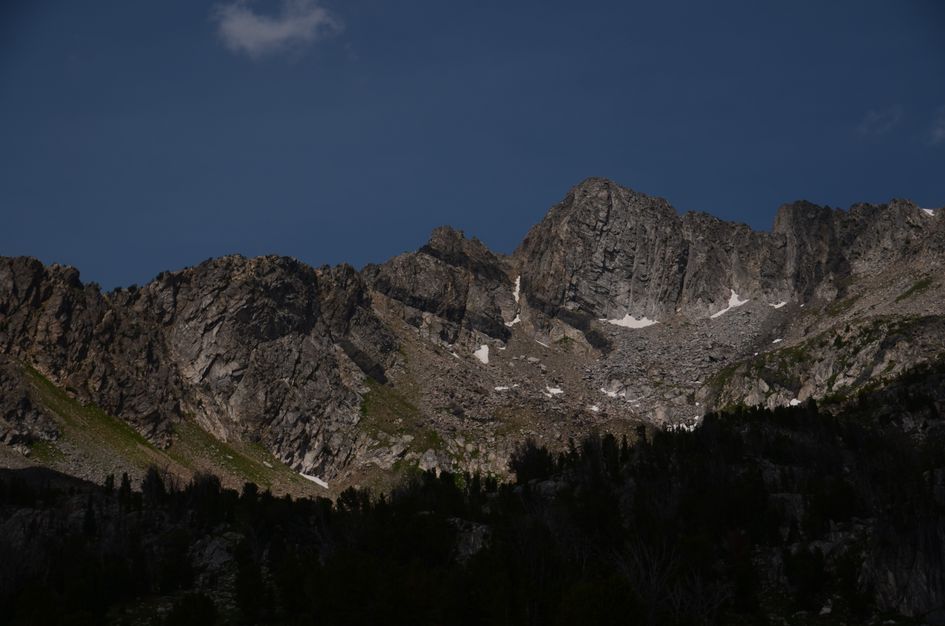
Most moderate hikes near Bozeman give you one good thing. Beehive gives you three. The trail starts in open meadow, winds through patches of burned and recovering forest, and climbs steadily into a granite cirque that feels genuinely remote even though it's just over an hour from town. The wildflower bloom in late June and July is some of the best in the Gallatin Range, with lupine, paintbrush, and balsamroot running through the meadows all the way to the upper basin. And then there's Lone Peak rising behind the lake at the end, one of the most recognizable views in Montana.
This isn't a hike that gives you ridge views from a distance. It puts you inside the mountains, surrounded by the peaks rather than just looking at them. The trail is well-worn and easy to follow the whole way, which keeps it accessible for newer hikers, but the altitude and distance mean you'll feel like you earned it.
There's room for 15-20 cars at the trailhead, which includes a bit of road parking. It's tight, arrive at the trailhead early to nab a spot.
There is no bathroom at the trailhead. In fact, it can be hard to find one while you're driving through Big Sky as well. Plan ahead and use the Conoco on your left soon after you turn west on 64.
The national recognition and convenience from Big Sky keeps this trail consistently busy. Start early.
The road is paved and in good condition the entire drive. There is one steep section of road just before you reach the trailhead. Be aware that it could be dangerous in icy conditions.
You won't have any phone service on this hike.
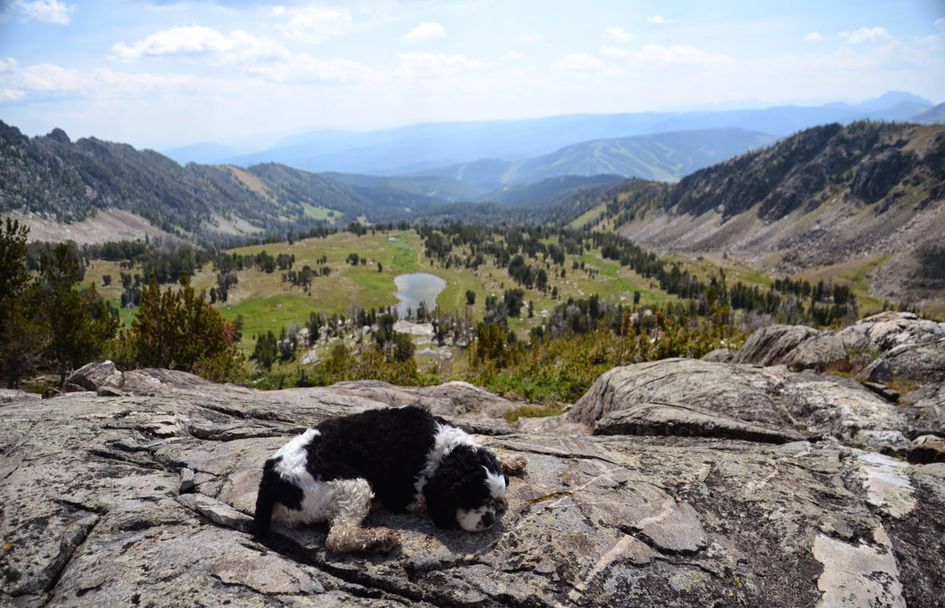
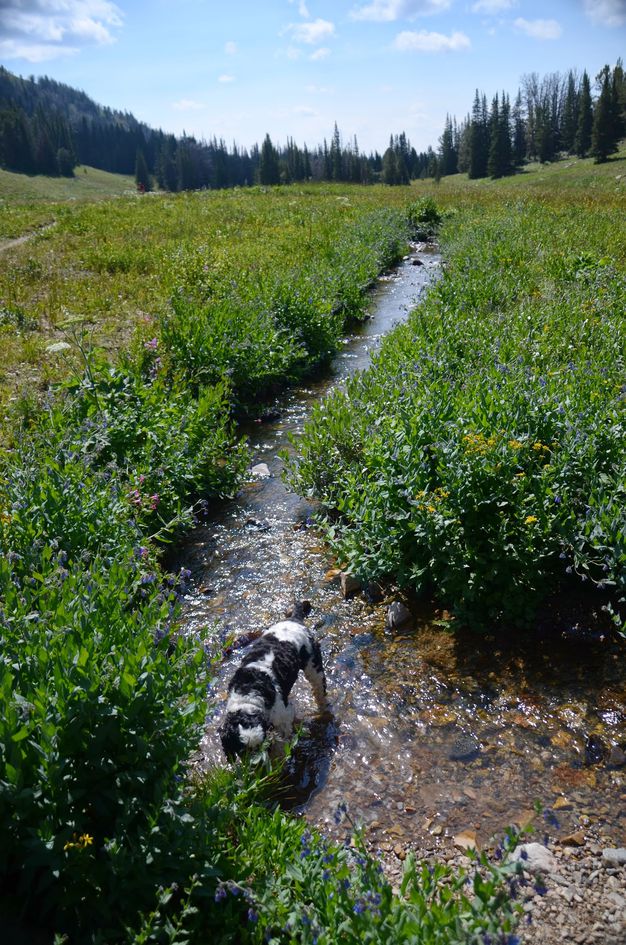
There isn't a lot of shade, so use caution bringing the dogs on very hot, sunny days. Otherwise, there's plenty of water for your pup to stay cool.
52 Miles from Bozeman, MT. 71 Minutes
Heading south on US 191 from Bozeman, head west on Montana 64 towards Big Sky. Drive through Big Sky for roughly 10 miles until you get to Beehive Basin Road. You'll see a sign for the Upper Beehive Basin Trailhead, follow it.
Between the small lake at the end of the hike and a few shallow crossings throughout, there's enough opportunity to purify extra water given the length of the hike.
64 oz consumed per person
The well-groomed, wide dirt trail is easy to follow the entire way to the basin.
You'll be exposed to the sun on this hike, so dress accordingly. Consider bringing layers for changing conditions at the top.
Footwear: Tennis Shoes OK
A snack or a light lunch is recommended.
There may be a few flies and mosquitoes around, but nothing too bad.
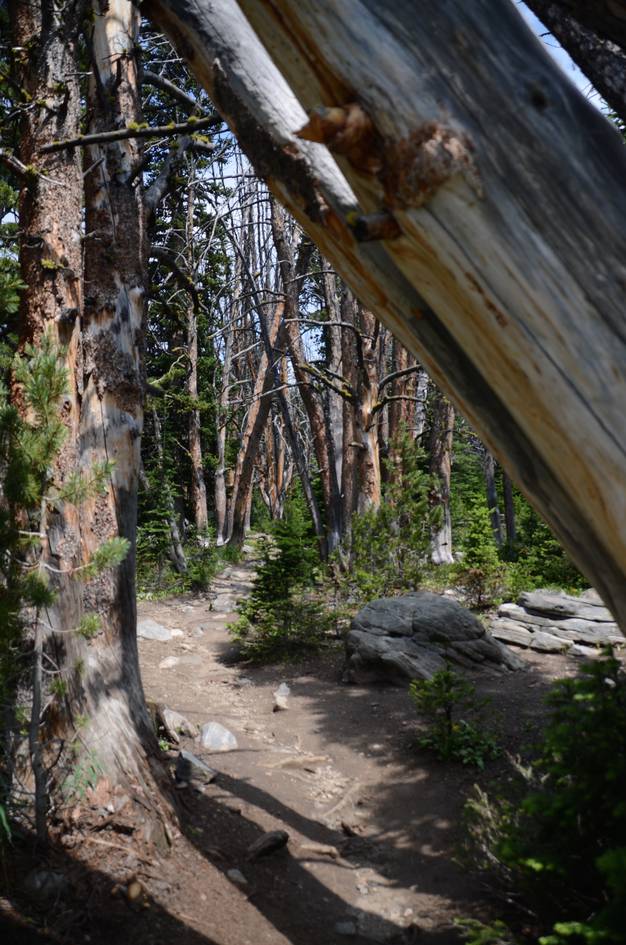
There are a few brief walks through patches of forest, but most of the hike is through meadow.
Definitely possible, but less than ideal. A lack of trees and the popularity of the trail make finding a comfortable tent spot difficult. Additionally, there aren't many trail connection options to extend your trip. If you do stay overnight, work towards the edges of the basin far away from the water and crowds to find some peace.
Bear Basin
You'll reach a "T" in the trail about 1.25 miles in. Take a right, then a left to wind up into Bear Basin.
Overlook Beyond the Lake
Once you reach the lake at the end of the hike, take some time to keep going past it on an obvious trail. You'll find some beautiful views that overlook the lake.
Beartooth Publishing's Big Sky Area covers this whole hike.
The trail is hikeable from late June through early October in most years. July is peak wildflower season and also the busiest month. September is worth considering if you want lighter crowds and fall color in the basin.
July–August: full wildflowers, all snow cleared, warm temperatures — and the most people. Arrive early.
Late June and September: fewer hikers, still excellent conditions. Late June may have snow patches in the upper basin.
Before mid-June or after mid-October: snow in the upper basin is likely. The road stays open, but trail conditions are variable.
Moderate is accurate. The 1,335 feet of elevation gain is spread across 6.3 miles with enough flat sections to keep it manageable, and the trail is easy to follow throughout. The altitude is the main variable — the trailhead starts near 8,000 feet, so give yourself extra time if you're coming from lower elevation.
Yes, and it's one of those cases where the reputation is actually earned. The wildflower meadows, the granite peaks, the views of Lone Peak, and the lake at the end make it a genuinely complete alpine experience. The crowds are real, but an early start takes care of most of that.
Yes. Dogs are welcome and you'll see plenty of them. Bring extra water since there's minimal shade and the hike is long enough that heat can be a factor on hot days.
Late June through early September, with July being peak wildflower season. September is a strong choice for fewer crowds and fall color. Avoid summer weekends unless you're starting by 8am.
Heavily crowded on summer weekends. It's one of the most recognized hikes in the state, and its proximity to Big Sky keeps it consistently busy all season. Weekday mornings are a significant improvement.
The lot fits 15–20 cars including some road overflow. On summer weekends it fills up early — before 9am in peak season. If you can't find a spot at the trailhead, you can park along the access road and walk in.
Averaging around 1.25 miles per hour, you'll reach the lake in about 2.5 hours. With a half-hour break in the basin, you can be back at the car in 5 hours. Add the 71-minute drive from Bozeman and you're looking at a full day.
Plug 6.3 miles and 1,335 feet of elevation gain into our free hiking time calculator for a personalized estimate.