Wildflower season near Bozeman is not one weekend. It is a moving target that starts low, climbs with the snowline, and shifts from sunny foothills to alpine basins as summer settles in.
That is the part most wildflower lists miss. If you go to a hot, exposed foothill trail in late July, the balsamroot show is already over. If you go to a high alpine basin in May, you are probably looking at snow. The trick is matching the month to the elevation.
Here is the simple version: May belongs to the foothills. June belongs to the lower mountain trails and Hyalite. July is the money window for Big Sky, the Bridgers, and alpine lakes. August is for high, cool, late-blooming pockets where fireweed and paintbrush hang on after the lower trails turn dusty.


Quick Answer: When Is Wildflower Season Near Bozeman?
For most hikers, the best wildflower window near Bozeman is mid-June through late July. That gives you enough snowmelt for mountain trails, enough warmth for consistent blooms, and enough options that you can adjust based on road access and weather.
If you want the broader season, think of it this way:
May to Early June
- Best elevation
- Low foothills and south-facing slopes
- Look for
- Arrowleaf balsamroot, shooting stars, larkspur
- Best trails
- Peets Hill, The M, Drinking Horse
Mid to Late June
- Best elevation
- Lower mountain trails and open meadows
- Look for
- Lupine, geranium, paintbrush, early columbine
- Best trails
- Triple Tree, Grotto Falls, Kirk Hill
July
- Best elevation
- Alpine basins and high trailheads
- Look for
- Lupine, Indian paintbrush, columbine, harebells
- Best trails
- Beehive Basin, Fairy Lake to Sacagawea Peak, Hyalite Lake
August
- Best elevation
- High, shaded, or wetter drainages
- Look for
- Fireweed, late paintbrush, alpine asters
- Best trails
- Windy Pass, Tumbledown Lake, Mount Blackmore
The exact timing changes every year. A low-snow spring can move everything earlier. A cold, wet June can delay the high-country bloom. If you only remember one rule, remember this: follow the snowmelt uphill.
May to Early June: Foothill Bloom Season
The first reliable wildflower hikes near Bozeman are the same trails that dry out first in spring: exposed, south-facing, low-elevation foothill trails close to town.
This is the window for arrowleaf balsamroot, the big yellow sunflower-looking bloom that covers open hillsides around Bozeman. You will also start seeing shooting stars, prairie smoke, larkspur, yellow bells, and early lupine depending on aspect and moisture.
The best part of May wildflower hiking is convenience. You do not need to drive deep into a canyon or wait for a Forest Service road to open. The best options are ten minutes from town. The tradeoff is heat and crowds. These trails have limited shade, and once Bozeman gets a string of warm afternoons, the bloom moves fast.
Best May Wildflower Hikes

Peets Hill / Burke Park is the easiest call if you are staying downtown. It is more of a walk than a hike, but the open ridge catches early sun and produces one of the first easy flower shows in town. Go near sunset for the best light over the Gallatin Valley.
The M Trail is the classic Bozeman balsamroot hike. The exposed hillside warms early, and the longer route gives you better flower viewing than the steep route. It is also the most crowded trail in town, so go before 8 AM if you want anything close to quiet.
Drinking Horse Mountain sits right across from The M and is usually the better choice if the parking lot looks wild. The loop gives you a little more variety, with open slopes, summit views, and enough grade to feel like you actually hiked.
Triple Tree Trail starts to become especially good in late May and early June. The lower meadows and ridgelines can hold balsamroot and lupine, and the trail has better valley views than most people expect from the south side of town.
Mid to Late June: The Bloom Climbs Into the Canyons
By June, the foothills are starting to fade, but the lower mountain trails are waking up. This is when wildflower hiking gets more interesting because different aspects can be in completely different stages on the same day.
Sunny meadows may already be peaking. Shaded forest edges may just be getting started. Wet drainages hold color longer, and trails with a mix of open hillside, creek corridor, and forest edge give you the most variety.
This is also when you need to pay attention to road access. Hyalite Canyon Road normally reopens in mid-May after the spring closure, but some high trails are still holding snow well into June. You can usually enjoy the lower canyon before the alpine lakes are fully ready.


Best June Wildflower Hikes
Grotto Falls is a good early Hyalite choice because the trail is low, shaded, and forgiving. It is not the biggest wildflower destination in the canyon, but you get creekside greenery, an easy waterfall, and a low-commitment way to check what is happening higher up.
Kirk Hill is useful on hot June days because the trail is shaded by old-growth forest. You will not get the sweeping yellow hillsides you see on The M, but you will get cooler temperatures and small forest-edge blooms after the exposed trails are already turning dry.
Triple Tree Trail stays good into June because it combines open meadows, forest, and ridgeline. If you want one close-to-town trail that feels more like a real hike than Peets Hill but does not require a canyon drive, this is the one.
Storm Castle Peak can be a strong June option if you want a harder hike. The lower switchbacks often have good color before the south-facing limestone slope turns hot and dusty. Start early. This trail bakes later in the day.
July: Peak Alpine Wildflower Season
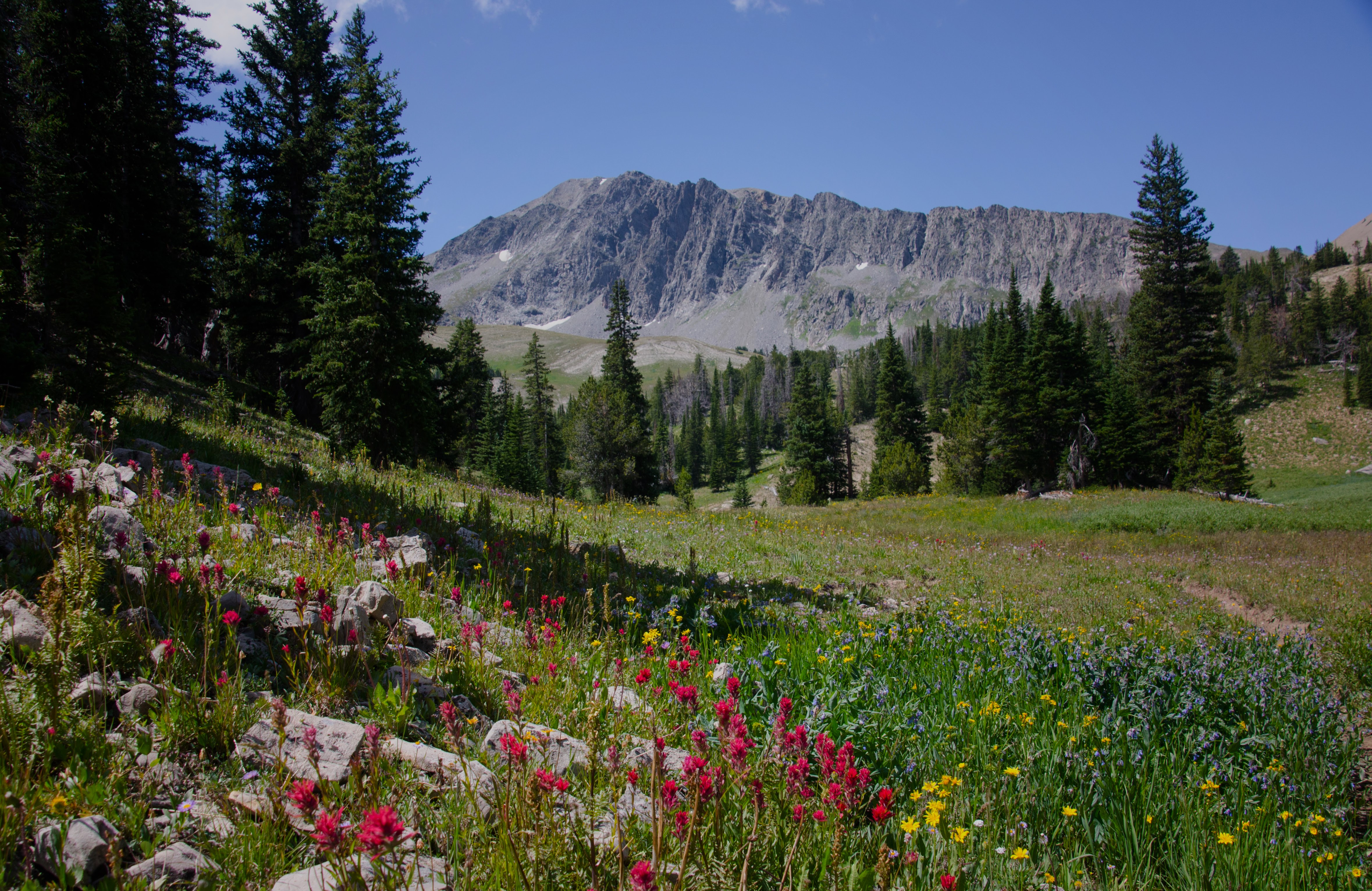
July is the headline month. If you are imagining purple lupine, red paintbrush, alpine meadows, rocky peaks, and a trail winding toward a mountain basin, you are probably imagining July.
The reason is elevation. By July, most of the accessible high trails around Bozeman and Big Sky have melted out enough for hiking, but the ground still has spring moisture. That combination creates the biggest and most photogenic bloom.
The catch is that everyone else knows this too. July is also peak crowd season. For the famous trails, your wildflower plan is also a parking plan.
Best July Wildflower Hikes
Beehive Basin is the obvious choice and still deserves the attention. The trail climbs through open meadows toward a granite basin below Lone Peak, and the late June to July bloom is one of the best in the Gallatin Range. The parking lot is tiny. Arrive early enough that it feels a little unreasonable, because by mid-morning on a summer weekend the trailhead is already a problem.
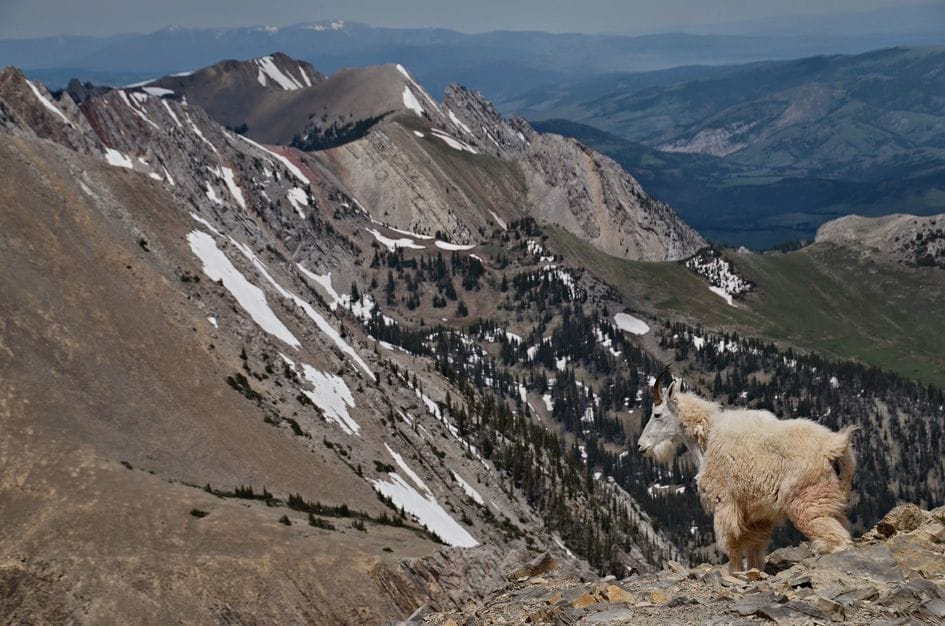
Fairy Lake to Sacagawea Peak is the best Bridger Range option once Fairy Lake Road is open and the upper trail is clear. The basin below Sacagawea Peak can hold snow into July, which is exactly why the bloom can be so good once it finally goes. Expect goats, wind, exposure, and a real climb.
Hyalite Lake is a full-day wildflower hike rather than a quick flower walk. The first miles are more waterfall-and-forest than meadow, but the upper basin opens into the kind of high country that makes the long approach worth it. Go when you want waterfalls, wildflowers, and an alpine lake in one big day.
Emerald and Heather Lakes is another strong Hyalite choice for July. It is long, but the upper meadows and lakes are excellent once the snow clears. This is a better pick for hikers who want a quieter day than the main Hyalite Lake trail.

August: Chase the Late Bloom Higher
By August, lower trails around Bozeman are usually dusty, hot, and past their best flower window. That does not mean wildflower season is over. It means you need to go higher, wetter, or farther from town.
Look for trails with high trailheads, north-facing pockets, creek corridors, alpine meadows, or burn areas where fireweed comes in late. The displays are usually patchier than July, but they can feel more rewarding because the crowds start thinning as visitors shift from “summer vacation” mode toward back-to-school reality.
Best August Wildflower Hikes
Windy Pass is a good late-season Gallatin Canyon pick because the route moves through broad meadows and cooler upper terrain. The road is rough, so this is not a casual sedan adventure, but the wildflower-and-big-valley payoff is strong.
Tumbledown Lake has the right ingredients for a late bloom: distance, moisture, meadows, and elevation. It is not close, and it is not short, which helps keep the experience quieter than Beehive Basin.
Mount Blackmore can hold late color on the upper slopes and around the lake approach, especially in wetter years. This is a strenuous hike with real exposure near the top, so treat it as a summit day, not a casual flower stroll.
The Beaten Path is outside the immediate Bozeman orbit, but if you are planning a backpacking trip, late July into August is the window when the Absaroka-Beartooth high country can be spectacular. Wildflowers, lakes, and big alpine terrain are the entire point.

Best Trails by Flower
If you are chasing a specific kind of bloom, use this as a starting point.
Arrowleaf balsamroot: The M, Drinking Horse, Peets Hill, Triple Tree. Look for open, sunny, lower-elevation hillsides in May and early June.

Lupine: Beehive Basin, Hyalite Canyon, Fairy Lake, Triple Tree. Lupine starts lower in June and keeps showing higher into July.
Indian paintbrush: Hyalite Canyon, Beehive Basin, Fairy Lake to Sacagawea Peak, Windy Pass. Look in July for the strongest color.
Columbine: Shadier, cooler mountain pockets in Hyalite and the Bridgers. You are more likely to notice individual flowers than huge carpets.
Fireweed: Triple Tree, Tumbledown Lake, and disturbed or burned areas later in summer. Late July and August are the better window.
What Most Wildflower Guides Do Not Tell You
Wildflower hiking is weirdly easy to get wrong. The flowers are either there or they are not, and a two-week timing mistake can turn a great hike into a dusty walk.
Elevation matters more than the calendar. Lower trails bloom first. High trails bloom later. If someone posts a great photo from Beehive Basin in late July, do not assume The M still looks like that.
Aspect matters too. South-facing slopes warm first and dry first. North-facing or shaded trails lag behind, then often hold flowers a little longer.
Road openings are part of the bloom calendar. Fairy Lake and other higher trailheads can be physically close to Bozeman but still inaccessible by car early in the season.
Morning is better. Flowers photograph better in softer light, the trails are cooler, and parking is easier. This is especially true for Beehive Basin, The M, and Hyalite on weekends.
Stay on the trail. Alpine meadows are more fragile than they look. A photo is not worth trampling the exact thing you came to see.
Bring the normal Montana kit. Bear spray, water, sun protection, and a layer. Wildflower season overlaps with grizzly country, afternoon thunderstorms, and surprisingly cold wind on ridges.
The Best Wildflower Plan for a Bozeman Trip
If you have one day, pick based on the month.
May: The M or Drinking Horse early in the morning, then Peets Hill at sunset.
June: Triple Tree if you want to stay close to town, or Grotto Falls and the lower Hyalite area if you want a canyon day.
July: Beehive Basin if you can start early, Fairy Lake to Sacagawea Peak if the road is open and you want a bigger objective, or Hyalite Lake if you want waterfalls and alpine terrain in one long hike.
August: Windy Pass or Tumbledown Lake if you want a quieter, higher-elevation wildflower day. Mount Blackmore if you want to earn the view.
The larger pattern is simple and reliable: start low, move higher, and let the season tell you where to go. Bozeman’s wildflower window lasts for months if you follow it uphill.